
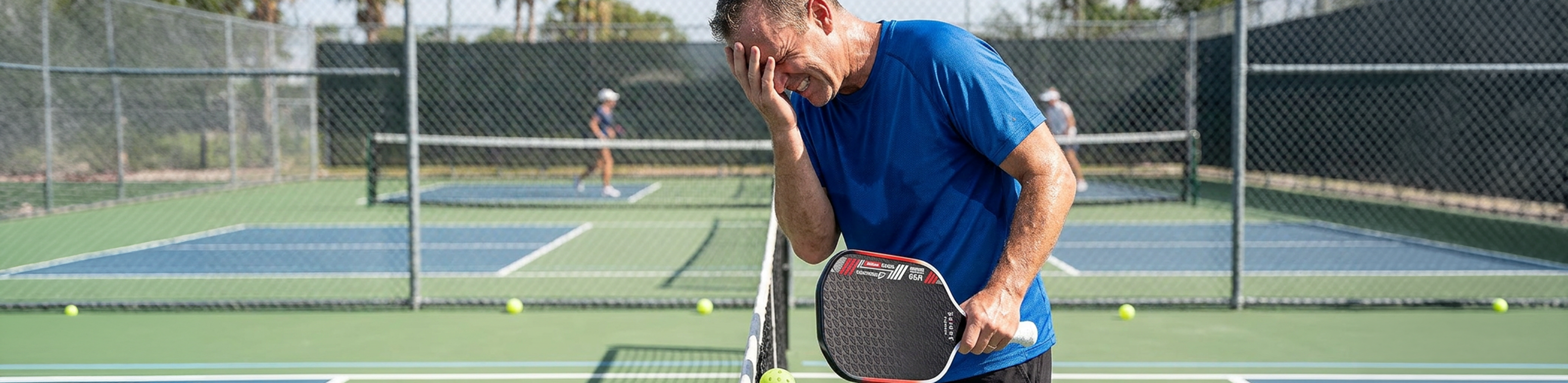
Pickleball’s charm lies in how quickly new players can step onto the court and start having fun. Within a short time, rallies begin to form, confidence grows, and the game feels intuitive. But as with any sport, early habits shape long-term progress. Many beginners unknowingly develop patterns that limit improvement, not because they lack ability, but because they are learning without guidance.
Understanding the most common mistakes and how to correct them can dramatically accelerate your development. With the right adjustments, beginners can move from inconsistent play to confident, controlled performance much faster.
Mistake 1: Prioritizing Power Over Control
It is natural for beginners to swing hard in an effort to win points quickly. The instinct often comes from other racket sports where power plays a dominant role. In pickleball, however, power without control leads to unforced errors and short rallies.
The ball is lightweight and responsive, meaning even a slightly mistimed shot can sail long or wide. Skilled players rely on placement, angles, and consistency rather than brute force.
To correct this, focus on smooth, compact swings. Aim to keep the ball in play and build rallies. As your control improves, power will develop naturally and become more effective.
Mistake 2: Ignoring the Kitchen Line
One of the defining features of pickleball is the non volley zone, yet many beginners avoid it or misunderstand its importance. Staying too far back on the court limits your ability to control the rally and react quickly.
The kitchen line is the most strategic position on the court. From there, you can intercept shots early and dictate the pace of play.
After serving or returning, move forward with intention. Establishing position near the kitchen allows you to stay engaged and reduces the pressure of defending from the baseline.
Mistake 3: Skipping the Soft Game
Beginners often overlook the importance of soft shots, especially dinks. The slower pace can feel counterintuitive, particularly for players used to faster, more aggressive sports.
However, the soft game is where pickleball truly unfolds. Dinking forces opponents into controlled exchanges and creates opportunities to exploit positioning and timing.
Start by practicing simple, consistent dinks. Focus on keeping the ball low and placing it gently into the kitchen. Developing this skill early gives you a significant advantage as you progress.
Mistake 4: Poor Court Positioning
Even with solid strokes, poor positioning can lead to missed opportunities and easy points for opponents. Beginners frequently remain in the wrong areas of the court, especially after serving or returning.
After the initial shots, work your way forward and hold your ground near the kitchen line. In doubles, coordinate with your partner so you move as a unit. Staying aligned prevents gaps and keeps your defense strong.
Awareness of your position relative to the ball, your partner, and your opponents is just as important as the shot itself.
Mistake 5: Holding the Paddle Too Low
A subtle but impactful mistake is dropping the paddle between shots. When your paddle is not in a ready position, your reaction time slows, especially during fast exchanges at the net.
Keeping your paddle up and in front of your body prepares you for quick volleys and unexpected shots. This habit alone can significantly improve your consistency during rallies.
Think of it as staying engaged in every moment of the point. A ready paddle position keeps you prepared and confident.
Mistake 6: Overhitting Returns and Third Shots
The return of serve and the third shot are critical moments in every rally. Beginners often try to do too much with these shots, aiming for winners instead of setting up the point.
A deep, controlled return gives you time to move forward and establish position. Similarly, a well placed third shot, often a soft drop into the kitchen, allows you to transition to the net.
Focus on placement rather than power. These shots are about building the rally, not ending it prematurely.
Mistake 7: Neglecting Footwork
Footwork is the foundation of consistency, yet it is often overlooked. Reaching for the ball instead of moving your feet leads to off balance shots and reduced control.
Develop the habit of taking small, quick steps to position yourself properly. Staying balanced allows for cleaner contact and more reliable shot execution.
Improved footwork also enhances your ability to recover quickly and prepare for the next shot.
Mistake 8: Playing Without Purpose
Simply showing up and playing games can be enjoyable, but it may not lead to meaningful improvement. Beginners who practice without focus often repeat the same mistakes.
Introduce structure into your practice sessions. Work on specific skills such as serving accuracy, dinking consistency, or return placement. Even short, focused drills can produce noticeable results.
Setting small, achievable goals keeps your development on track and makes each session more productive.
Mistake 9: Avoiding Better Competition
It can be tempting to play only with players at the same skill level. While this can be comfortable, it may limit growth.
Playing with more experienced players exposes you to better shot selection, positioning, and strategy. It challenges you to adapt and refine your skills.
Approach these games with a learning mindset. Observe how advanced players construct points and manage rallies. The experience will accelerate your understanding of the game.
Mistake 10: Letting Frustration Take Over
Learning a new sport comes with ups and downs. Beginners sometimes become discouraged when mistakes pile up or progress feels slow.
Frustration can lead to rushed decisions and poor shot selection. Instead, view each mistake as feedback. Identify what went wrong and make small adjustments.
Maintaining a positive, patient mindset keeps you focused on improvement rather than immediate results.
Final Thoughts
Every pickleball player starts as a beginner, and mistakes are part of the journey. The difference between slow and steady improvement often comes down to awareness and intention.
By focusing on control, positioning, and the soft game, you build a foundation that supports long term success. Avoiding these common pitfalls allows you to progress more efficiently and enjoy the game at a deeper level.
Stay curious, keep practicing with purpose, and embrace the learning process. With the right approach, each session brings you closer to becoming a confident and capable player.


