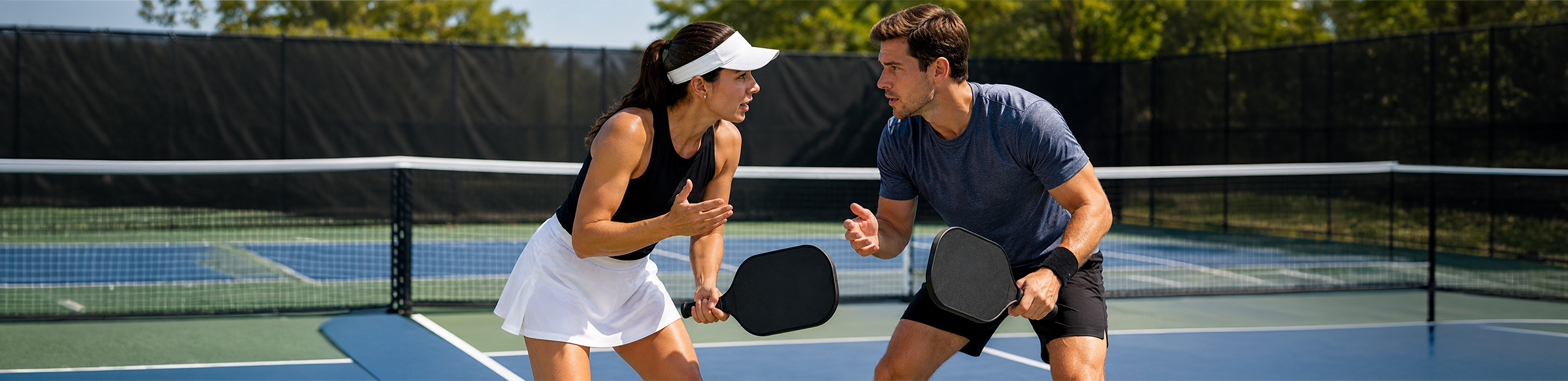
Pickleball is often described as one of the most social sports in the world, but beneath the friendly atmosphere lies a truth every experienced doubles player understands. Teams do not succeed on talent alone. They succeed through communication.
A pair of players with average skill but excellent teamwork can often outperform stronger opponents who struggle to communicate effectively. In doubles pickleball, movement, positioning, timing, and decision making are deeply connected. When partners fail to communicate clearly, confusion quickly takes over. Balls drop untouched in the middle of the court, both players chase the same shot, frustration builds, and momentum disappears.
On the other hand, strong communication creates trust. It allows teams to move confidently, anticipate each other’s actions, and stay mentally composed under pressure. Great doubles teams often appear synchronized not because they read minds, but because they consistently exchange useful information before, during, and after points.
The good news is that communication is a skill any player can improve. It does not require elite athleticism or years of experience. Small changes in how partners speak, react, and support each other can dramatically improve chemistry and overall performance.
Why Communication Matters So Much in Pickleball
Doubles pickleball moves quickly. Players must make split second decisions while covering a relatively small court with another person. That creates constant opportunities for confusion.
Communication solves several critical problems:
Court Coverage
Partners need clarity about who will take middle balls, lobs, short dinks, and transition shots.
Decision Making
Verbal cues help players decide whether to attack, reset, switch, or stay patient during rallies.
Confidence
Encouragement between points keeps emotions steady and prevents frustration from spreading.
Anticipation
Good communication allows players to predict each other’s movement and positioning.
Adaptability
Strong teams can make tactical adjustments during matches instead of repeating mistakes.
The most successful doubles teams treat communication as part of their strategy rather than an afterthought.
Start Communicating Before the Match Begins
Effective communication starts long before the first serve.
Many teams wait until problems appear before discussing strategy, but proactive conversations create stronger partnerships from the beginning.
Before the match, discuss:
Who Takes Middle Balls
This is one of the most common sources of confusion in doubles. Some teams prefer the forehand player to take middle shots whenever possible. Others divide the court differently.
The key is agreeing ahead of time.
Serve and Return Preferences
Discuss where serves and returns should be directed and how aggressively the team wants to play early in rallies.
Movement and Switching
Talk about how to handle lobs, stacked formations, or defensive situations.
Communication Style
Some players prefer constant verbal feedback while others like shorter, calmer communication. Understanding preferences helps prevent misunderstandings later.
These conversations create clarity and reduce hesitation once play begins.
Use Simple and Clear Verbal Cues
During rallies, communication must be fast and easy to understand.
Long explanations do not work in the middle of quick exchanges. The best doubles teams rely on short, consistent verbal cues.
Common Effective Calls
“Mine”
“Yours”
“Switch”
“Bounce”
“Out”
“Go”
“Watch it”
These short phrases help players react immediately without overthinking.
One of the biggest mistakes teams make is staying silent during important moments. Even experienced players can become uncertain when communication disappears.
Calling the ball confidently prevents hesitation and builds trust between partners.
Talk Between Points, Not Just During Them
Strong communication is not limited to live rallies.
The moments between points are often where great doubles teams separate themselves mentally.
Reinforce Positivity
Simple encouragement matters more than many players realize.
Phrases like:
“Good idea”
“We are fine”
“Keep doing that”
“Nice setup”
can stabilize confidence even after mistakes.
Pickleball is heavily psychological. Players who feel supported tend to stay calmer and recover from errors more quickly.
Discuss Patterns
Use breaks between points to identify opponent tendencies.
Are opponents targeting one player repeatedly?
Are they struggling with low dinks?
Are they overcommitting to speed ups?
Quick observations can help teams adjust strategy in real time.
Reset Emotionally
Mistakes happen in every match. Strong teams avoid carrying frustration from one point into the next.
Brief positive communication helps reset focus and maintain composure.
Body Language Speaks Loudly
Communication is not only verbal.
Body language constantly sends messages to a doubles partner, whether intentional or not.
Negative reactions after missed shots often damage team chemistry more than the mistake itself.
Examples of harmful body language include:
Throwing hands in the air
Looking annoyed after errors
Avoiding eye contact
Sighing dramatically
Walking away silently
Even subtle frustration can create tension and uncertainty.
Positive body language, on the other hand, builds trust.
Eye contact, paddle taps, relaxed posture, and calm reactions reassure teammates and maintain emotional stability.
The best doubles players understand that supporting a partner emotionally is part of competing well.
Learn How to Give Feedback Constructively
At some point, every doubles team needs to discuss mistakes or tactical adjustments. The way those conversations happen matters enormously.
Constructive communication focuses on solutions rather than blame.
Instead of saying:
“You keep popping the ball up.”
Try:
“Let’s try keeping those resets a little lower.”
The second approach keeps both players working together instead of creating defensiveness.
Great partners communicate with respect, even during difficult matches.
Trust Is the Foundation of Communication
Communication works best when players trust each other.
Without trust, partners begin overplaying, second guessing, or trying to control every point individually.
Trust allows players to:
Commit confidently to shots
Move aggressively toward the kitchen
Stay patient during long rallies
Recover mentally after mistakes
Trust develops through consistency, encouragement, and shared experience.
One missed shot should never destroy a team’s chemistry. Strong doubles partners understand that mistakes are part of the game.
The Importance of Listening
Good communication is not just about speaking clearly. It also requires listening carefully.
Some players dominate conversations and unintentionally dismiss their partner’s observations. Others become defensive when feedback is offered.
The strongest teams stay open minded.
Sometimes a partner notices tendencies or positioning issues that are difficult to recognize during fast paced play.
Listening respectfully creates better teamwork and stronger decision making.
Communication Changes at Different Skill Levels
Interestingly, communication evolves as players improve.
Beginner Players
Communication focuses mostly on ball ownership and basic positioning.
Intermediate Players
Teams begin discussing strategy, targeting, and movement patterns.
Advanced Players
Communication becomes more subtle and efficient. Experienced teams often use quick reminders, eye contact, or simple cues because trust and familiarity are already established.
At every level, however, the core principle remains the same. Clear communication improves performance.
Practice Communication During Drills
Many players only think about communication during matches, but practice sessions are an ideal time to develop stronger habits.
During drills, partners should:
Call every ball clearly
Discuss positioning after rallies
Practice switching on lobs
Communicate targets during dinking drills
Work on emotional composure
Training communication intentionally helps it become natural during competition.
Handling Difficult Moments During Matches
Every doubles team eventually faces frustrating stretches. Momentum swings, missed shots, and tough opponents can create tension quickly.
The key is responding constructively.
When frustration rises:
Slow down between points
Take deep breaths
Use calm voices
Focus on the next rally
Avoid blame
Return to simple strategies
Emotionally disciplined teams often recover faster than more talented but reactive opponents.
Building Long Term Doubles Chemistry
Some doubles partnerships seem effortless because players have developed chemistry over time.
Chemistry grows through:
Consistent play together
Honest communication
Shared trust
Mutual respect
Understanding each other’s strengths and weaknesses
The more experience partners gain together, the more naturally communication flows.
Over time, teammates begin anticipating movement, reading positioning instinctively, and staying composed during pressure situations.
Final Thoughts
Pickleball doubles is not simply about hitting great shots. It is about functioning as a team.
Communication influences nearly every aspect of doubles performance, from court coverage and strategy to confidence and emotional control. Teams that communicate effectively move more smoothly, make better decisions, and handle pressure with greater composure.
The strongest partnerships are not always the loudest or most tactical. Often, they are simply the most supportive, clear, and connected.
The next time you step onto the court with a doubles partner, pay attention not only to your shots, but also to your communication. A few encouraging words, clear calls, and calm adjustments may end up helping your team far more than any single winner down the line.