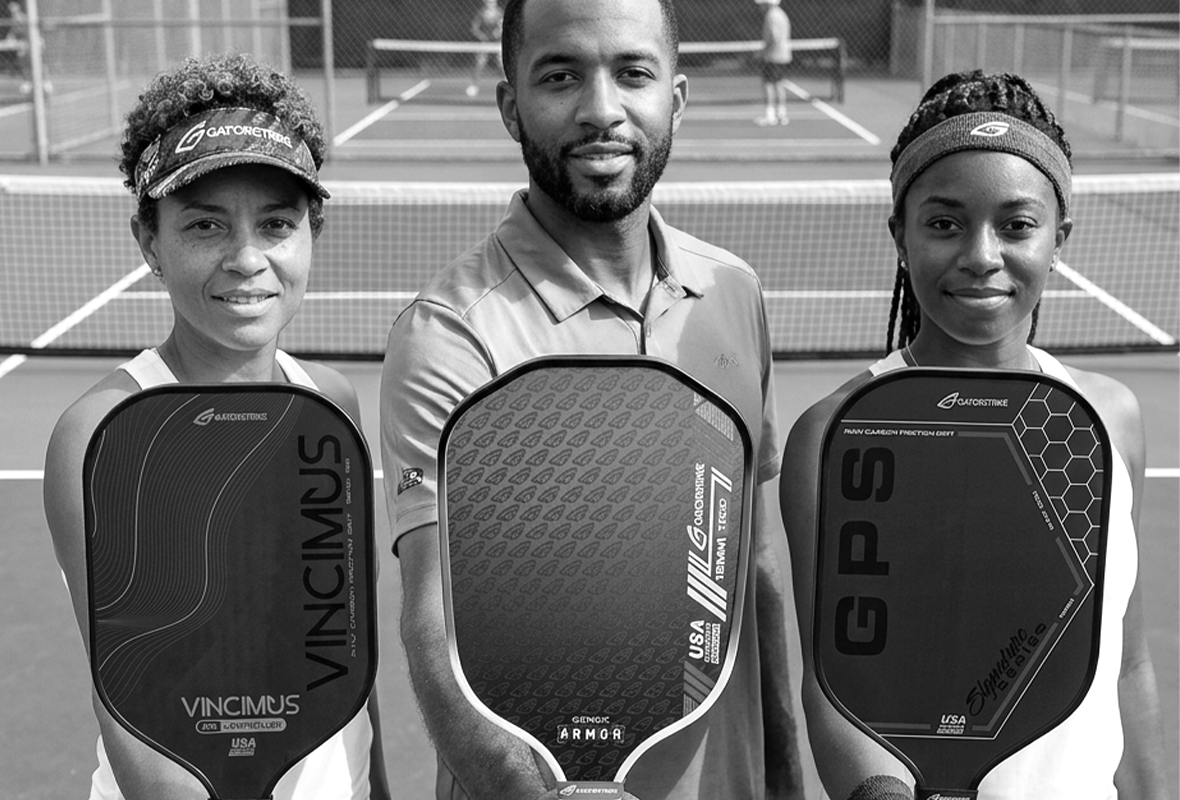
More Americans now play pickleball than tennis. That statistic surprises people who assumed the sport was a quirky retirement-community pastime, but the reality is more interesting. Pickleball is one of the fastest-growing sports in history, and it happens to be genuinely fun from your very first game.
Whether you have spotted a court at your local park or a friend keeps pestering you to give it a shot, understanding what makes pickleball different helps you enjoy it faster. Here is everything you need before you pick up a paddle.
Where Pickleball Came From
Pickleball was invented in the summer of 1965 on Bainbridge Island, Washington. Three fathers, Joel Pritchard, Bill Bell, and Barney McCallum, were trying to entertain their bored kids using equipment scattered around the house. They improvised with ping-pong paddles, a perforated plastic ball, and a badminton net lowered to waist height. The kids loved it. The adults got hooked too.
The sport spread quietly through the Pacific Northwest for decades before a combination of social media, retiring Baby Boomers, and the pandemic's hunger for outdoor activity pushed it into the mainstream. Today, an estimated 36 million Americans play at least occasionally. The name reportedly comes from the Pritchard family dog, Pickles, who had a habit of chasing the ball and keeping it away from players. Some accounts dispute the origin, but the story has stuck.
What the Court and Equipment Look Like
A pickleball court is 44 feet long and 20 feet wide, roughly a third of a tennis court's total area. A net sits at the center, standing 36 inches on the sides and 34 inches at the middle. Players use solid paddles made from wood, composite, or graphite, and hit a lightweight plastic ball with holes punched through it, similar to a wiffle ball but a bit heavier and rounder.
The most distinctive feature of the court is the non-volley zone, almost always called the kitchen. It extends 7 feet on each side of the net, and players cannot volley the ball (hit it out of the air) while standing inside this zone. This one rule changes the entire character of the game. It removes frantic net-rush dynamics and rewards placement, patience, and strategy over pure athleticism.
How a Point Works
Games are typically played to 11 points and require a 2-point margin to win. In traditional scoring, only the serving side can earn a point on a given rally. Win the rally while serving and your score goes up. Lose the rally while serving and the serve transfers. In doubles, both partners get a turn to serve before the serve transfers to the other team. The server calls out three numbers before each serve: the serving team's score, the receiving team's score, and whether they are the first or second server.
Why It Clicks for Beginners
The smaller court means less ground to cover. The slower ball gives you more reaction time than tennis. The kitchen rule means power alone will not beat you, which levels the playing field between someone who played collegiate tennis and someone who has not touched a racket since high school.
Most beginners are rallying back and forth and scoring actual points within their first session. That early sense of competence keeps people coming back, which is exactly how a sport earns 36 million players in a single generation.
Finding a Court and Getting Started
Courts are easy to find now. Many public tennis courts have been converted or marked with pickleball lines. Community centers, YMCAs, parks, and dedicated clubs have expanded to most cities. Open play sessions, where strangers show up and rotate into games together, are the standard entry point for beginners. Most courts run on an informal honor system: winners stay, losers rotate off.
Pickleball rewards curiosity. You do not need athletic history, expensive equipment, or years of practice to enjoy a real game. You need a paddle, a ball, and someone willing to rally. The rest takes care of itself.