Most pickleball players obsess over paddle shape, core thickness, surface texture, and grip comfort. Those details certainly matter, but there is one often overlooked feature quietly protecting the most vulnerable part of every paddle: the edge guard.
For many players, the edge guard barely earns a second thought until it becomes damaged, loose, or scraped beyond recognition. Yet this simple strip surrounding the paddle plays a surprisingly important role in durability, performance consistency, and long-term value.
Whether you are a beginner buying your first paddle or a competitive player investing in premium equipment, understanding edge guard protection can help extend the life of your paddle and even influence the way your paddle performs over time.
The truth is that edge guard protection matters far more than most players realize.
What Is an Edge Guard?
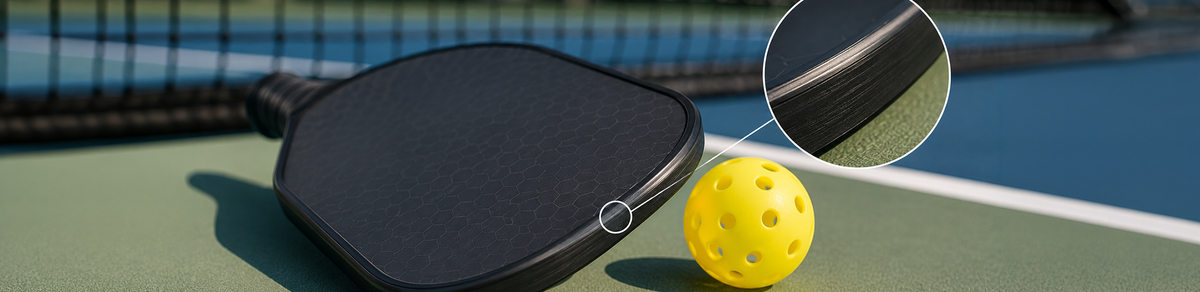
An edge guard is the protective strip that wraps around the outer edge of many pickleball paddles. Usually made from durable plastic or composite materials, it shields the paddle’s perimeter from direct impacts and surface abrasion.
Because pickleball is played close to the ground and involves fast reactions, paddles frequently scrape courts, collide with other paddles, or bump into hard surfaces during play. The edge guard acts as a defensive barrier between the paddle core and those damaging impacts.
Without protection, even minor contact could gradually weaken the paddle structure.
Why Paddle Edges Take So Much Abuse
Many players underestimate how often the edge of their paddle makes contact with something other than the ball.
Common causes of edge wear include:
- Reaching low for dinks
- Scooping defensive shots near the court surface
- Paddle clashes during doubles play
- Accidental drops
- Sliding paddles across benches or concrete
- Transport damage inside bags or vehicles
Over weeks and months, these small impacts accumulate. Even careful players subject their paddles to repeated stress simply through normal gameplay.
The edge guard absorbs much of that punishment before it reaches the core or face of the paddle.
Protecting the Paddle Core
The core is the heart of a pickleball paddle. Whether made from polymer honeycomb, aluminum, or other composite materials, the core determines much of the paddle’s feel, control, and responsiveness.
When the outer edge becomes exposed or damaged, the internal structure becomes vulnerable.
A compromised edge can lead to:
- Cracks spreading into the core
- Separation between paddle layers
- Reduced structural integrity
- Changes in vibration and feel
- Inconsistent performance
Edge guards help prevent those issues by absorbing impact before it reaches sensitive internal materials.
For players using high-end paddles, this protection can preserve hundreds of dollars in equipment investment.
Edge Damage Affects Performance
Many players think cosmetic damage is purely visual, but edge wear can eventually influence performance.
As paddles sustain repeated impacts, several things can happen:
Changes in Weight Distribution
Damaged or partially detached edge guards may alter the paddle’s balance slightly. Even small changes in weight distribution can affect swing speed, reaction time, and maneuverability.
Competitive players often notice these subtle differences quickly.
Reduced Stability
A damaged edge can weaken the paddle frame and reduce stability during off-center hits. Shots may begin to feel less solid or predictable.
Increased Vibrations
The edge guard helps dampen certain vibrations during contact. When damaged, players sometimes notice harsher feedback or less comfortable impact sensation.
While these changes may develop gradually, they can influence consistency over time.
Why Doubles Players Need Strong Edge Protection
Doubles pickleball creates especially high risk for paddle edge damage.
Fast exchanges at the kitchen line often force teammates into overlapping territory. During quick reflex volleys, accidental paddle collisions are common.
These paddle clashes can create:
- Chips
- Cracks
- Loose edge guards
- Structural weakness
A quality edge guard helps absorb the force of these collisions and may prevent catastrophic paddle damage.
Many experienced doubles players specifically prioritize durable edge protection when selecting new paddles.
Edge Guard vs Edgeless Paddles
In recent years, some manufacturers have introduced edgeless paddles that eliminate traditional edge guards entirely.
These paddles appeal to players seeking:
- Sleeker aerodynamics
- Expanded hitting surface
- Reduced edge interference
- Cleaner aesthetics
While edgeless designs offer certain benefits, they also introduce trade-offs.
Advantages of Edgeless Designs
Edgeless paddles may feel faster through the air and slightly more forgiving near the perimeter because there is no raised edge to interrupt ball contact.
Some players also prefer the modern appearance and smoother feel.
Disadvantages of Edgeless Designs
Without a protective barrier, the paddle edge itself absorbs direct impacts.
This can lead to:
- Faster cosmetic wear
- Increased vulnerability to chips
- Greater risk of structural damage
- Shorter lifespan for some players
Edgeless paddles often require more careful handling, especially during aggressive play or frequent travel.
For highly competitive or equipment-conscious players, the performance benefits may outweigh the durability concerns. For many recreational players, however, traditional edge guards provide valuable long-term protection.
Court Surface Makes a Difference
The type of court you play on heavily affects edge wear.
Outdoor Courts
Outdoor surfaces like concrete and asphalt are rough and abrasive. Frequent scraping during low shots can quickly wear down paddle edges.
Outdoor players generally experience:
- Faster edge deterioration
- More cosmetic damage
- Increased risk of cracking
Durable edge guards become especially important for players who spend most of their time outdoors.
Indoor Courts
Indoor gym surfaces are smoother and more forgiving. Edge wear still occurs, but usually at a slower pace.
Players who primarily play indoors may notice their paddles maintain a cleaner appearance for longer periods.
The Importance of Edge Guard Adhesion
An edge guard is only effective if it remains securely attached.
Over time, repeated impacts and temperature changes can weaken adhesive bonds. Once an edge guard begins separating from the paddle, problems can escalate quickly.
Loose edge guards may:
- Catch on balls during contact
- Create distracting vibrations
- Expose the paddle edge
- Worsen with continued play
Players should inspect their paddles regularly for lifting or gaps around the perimeter.
Early repairs are often easier and less expensive than waiting until major damage develops.
Edge Tape Adds Another Layer of Protection
Many players now use protective edge tape in addition to standard edge guards.
Edge tape is a lightweight adhesive strip applied over the edge guard itself to reduce cosmetic damage and extend paddle life.
Benefits include:
- Protection against scraping
- Reduced scuffing
- Improved appearance over time
- Extra reinforcement during aggressive play
Tournament players especially appreciate edge tape because it helps keep expensive paddles looking newer for longer.
Replacing tape periodically is far easier than replacing a damaged paddle.
Travel and Storage Risks
Some of the worst edge damage happens off the court.
Paddles tossed loosely into car trunks, packed tightly in luggage, or stored in extreme temperatures can experience unexpected stress.
To protect edge guards during travel:
- Use padded paddle covers
- Avoid stacking heavy items on paddles
- Store paddles in climate-controlled environments
- Keep them secure inside dedicated pickleball bags
Heat exposure can soften adhesives, while impacts during transport may loosen protective materials.
Players who travel frequently for tournaments should pay extra attention to paddle protection between matches.
How Long Should an Edge Guard Last?
The lifespan of an edge guard depends on several factors:
- Frequency of play
- Court surface
- Playing style
- Paddle quality
- Maintenance habits
Some players use the same edge guard for years with minimal issues, while highly aggressive players may see noticeable wear within months.
Heavy topspin players and players who frequently scoop low shots often wear edges faster because their paddles contact the court more often.
Regular inspection helps catch small issues before they become major problems.
Signs Your Edge Guard Needs Attention
Players should monitor for:
- Cracks along the edge
- Loose sections
- Sharp or lifted corners
- Deep abrasions
- Exposed paddle core material
- Unusual rattling or vibrations
Addressing these signs early may help preserve paddle performance and prevent more expensive damage later.
Why Recreational Players Should Care Too
Some players assume edge guard protection only matters for competitive athletes using expensive gear. In reality, recreational players may benefit even more.
Casual players often:
- Keep paddles longer
- Use the same paddle across multiple environments
- Share equipment with friends or family
- Store gear less carefully
Protecting the paddle helps maintain consistent playability and reduces replacement costs over time.
Even modestly priced paddles deserve proper care.
Final Thoughts
Edge guards rarely receive the attention given to paddle cores, face materials, or spin technology, yet they quietly perform one of the most important jobs in pickleball equipment protection.
They shield the paddle from everyday abuse, preserve structural integrity, and help maintain consistent performance across months or years of play. From accidental paddle clashes to rough outdoor courts, edge guards absorb damage that could otherwise shorten the life of a paddle dramatically.
For players investing time, money, and passion into pickleball, protecting equipment should never be an afterthought.
Sometimes the smallest design features turn out to be the most important over the long run.