Pickleball's explosive growth has come with an unexpected side effect: noise complaints. That sharp, repetitive POP of ball on paddle carries surprisingly far, and in neighborhoods with courts near homes, it has sparked petitions, lawsuits, and even court closures. The good news for 2026 is that the same foam technology transforming how paddles play is also one of the best tools we have for keeping the peace. Here's how foam core paddles cut the noise.
Why pickleball is so loud
The signature pickleball pop comes from a hard plastic ball striking a stiff paddle face. Traditional honeycomb paddles, with their rigid construction and open internal lattice, tend to produce a bright, high-pitched crack that travels well and grates on nearby ears. It's not that pickleball is louder than other sports overall, it's that the sound is sharp, repetitive, and high-frequency, exactly the kind of noise people find most irritating.
How foam quiets the pop
Foam cores trap and absorb sound far more effectively than open honeycomb. Instead of a sharp crack, a foam paddle produces a softer, more muted thud. The same dampening that reduces vibration in your arm also reduces the acoustic energy released at impact. That's why foam-based construction dominates the quiet-paddle category, the material is simply better at killing unwanted sound.
The reductions are meaningful. Quiet pickleball paddles can cut noise by roughly 7 to 13 decibels compared with typical paddles. Because decibels are logarithmic, that's a large perceived difference, often the gap between a sound that carries to a backyard and one that doesn't.
The USA Pickleball Quiet Category
The issue has become important enough that USA Pickleball introduced a Quiet Category certification. To qualify, a paddle must demonstrate roughly 50% lower acoustic output than typical paddles under standardized testing. The first models to earn the certification were engineered specifically to dampen sound without feeling like a dead, wooden board, and most rely on foam-based designs. If you play somewhere noise-sensitive, looking for a Quiet Category paddle, or a foam paddle known for muted sound, is a smart move.
Quiet without playing dead
The old worry was that a quiet paddle would feel lifeless. Modern foam engineering has largely solved that. The goal is balance: enough damping to cut noise without sacrificing the responsive feel you need for power, spin, and control. Because foam is so tunable, manufacturers can hit that target, delivering paddles that are noticeably quieter yet still play like real performance paddles. You don't have to choose between being a good neighbor and being a good player.
Other ways to keep the peace
A quieter paddle is the biggest lever, but it's not the only one. Communities also reduce noise with acoustic fencing and sound barriers, by positioning courts away from homes, by using quieter balls where appropriate, and by setting reasonable hours of play. If your group plays in a contested location, combining a foam paddle with these measures shows good faith and helps keep courts open for everyone.
Frequently asked questions
Do quiet foam paddles really make a difference?
Yes. A reduction of 7 to 13 decibels is substantial and can be the difference between disturbing neighbors and playing peacefully.
Will a quiet paddle hurt my performance?
Not with modern foam designs. They're engineered to cut noise while preserving a lively, responsive feel.
How do I know if a paddle is quiet?
Look for USA Pickleball Quiet Category certification or foam-based construction known for a muted sound profile.
Our recommendation: the GatorStrike A.R.M.O.R Paddle
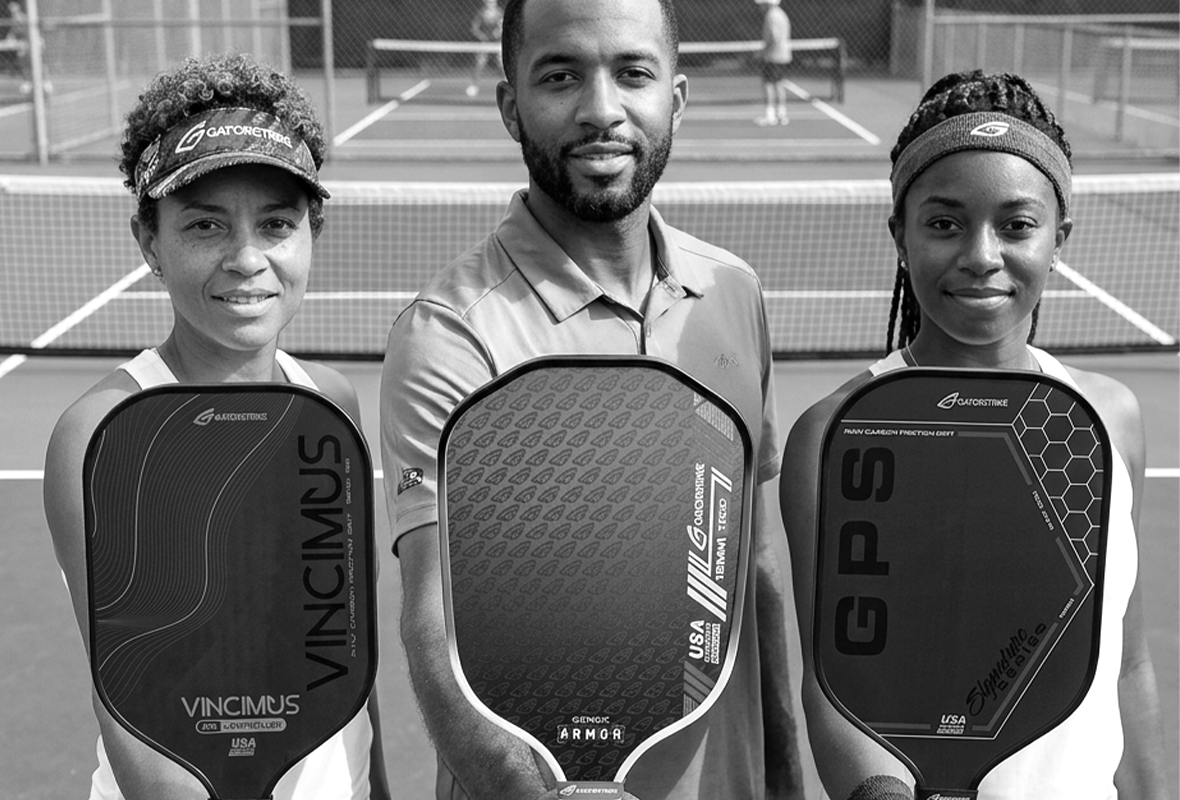
If you want foam's quieter, muted impact without giving up performance, the GatorStrike A.R.M.O.R Gen 5X All-Foam Paddle delivers. Its TriFextra 3-Foams-in-1 core, combining EPP, EVA, and PVA foams, absorbs sound and vibration at impact for a softer, more neighbor-friendly thud, while still bringing the power and control foam is known for. Play hard, play considerate. See the A.R.M.O.R Gen 5X here.