You don't have to play pickleball long to hear about "pickleball elbow." That nagging ache on the outside of the forearm, the same condition tennis players call tennis elbow, sidelines a lot of enthusiastic players every season. Technique and overuse are big factors, but your equipment matters too. One of the quieter benefits of the foam core revolution is comfort: foam dampens vibration, and that can meaningfully reduce the load on your arm. Here's how.
This article is general information, not medical advice. If you have persistent pain, please see a qualified healthcare professional.
What causes tennis elbow in pickleball?
Tennis elbow (lateral epicondylitis) is an overuse injury of the tendons that attach to the outside of the elbow. Repeated stress, especially from off-center hits and harsh impact shock, irritates those tendons over time. In pickleball, the fast, repetitive nature of dinks, drives, and punch volleys adds up, and every hard or mishit shot sends a jolt up the arm.
A key contributor is vibration. When the ball strikes the paddle, the impact creates vibration that travels through the handle into your hand, wrist, and forearm. The more of that shock your arm absorbs, shot after shot, the greater the cumulative strain.
How foam reduces vibration
This is where foam cores shine. Foam fills the paddle interior more completely and uniformly than a honeycomb lattice, and it naturally dampens vibration on contact. Instead of a sharp, ringing impact, a well-made foam paddle delivers a more muted, solid thud. Less vibration reaching the handle means less shock transmitted to your arm.
That's why players dealing with tennis elbow or wrist issues so often gravitate toward foam, the dampened feel is gentler over a long session. Foam's larger, more forgiving sweet spot helps here too: off-center hits, which produce the harshest vibration and the most twisting force, are softened because the response across the face is more even.
Other ways your paddle setup affects your arm
Grip size
A grip that's too small forces you to squeeze harder, increasing forearm tension. Make sure your grip circumference fits your hand; adding an overgrip can fine-tune it.
Weight and balance
An extremely light, head-heavy paddle can increase torque on the arm, while a slightly heavier, well-balanced paddle can actually feel more stable and absorb more shock. Comfort is personal, so test what feels smooth through a full swing.
Spin and string-like face tech
A face that grips the ball helps you keep hard shots in with spin, which can reduce the urge to muscle the ball, indirectly easing arm strain.
Smart habits to protect your elbow
Equipment helps, but pair it with good habits: warm up your wrist and forearm before play, strengthen your forearm with simple eccentric exercises, use proper technique so you're not arming the ball, and rest at the first sign of persistent soreness rather than playing through it. A dampening foam paddle is a great foundation, but it works best alongside sensible training and recovery.
Frequently asked questions
Can a foam paddle cure tennis elbow?
No paddle cures an injury. But a vibration-dampening foam paddle can reduce the impact shock that contributes to it, which may help prevent flare-ups and improve comfort.
Are foam paddles better than adding a vibration dampener?
Foam addresses vibration at the source, in the core, rather than as an add-on. Many players find that more effective and consistent.
Should I see a doctor for elbow pain?
Yes, if pain is persistent or worsening. Equipment is one piece; a professional can address the underlying cause.
Our recommendation: the GatorStrike A.R.M.O.R Paddle
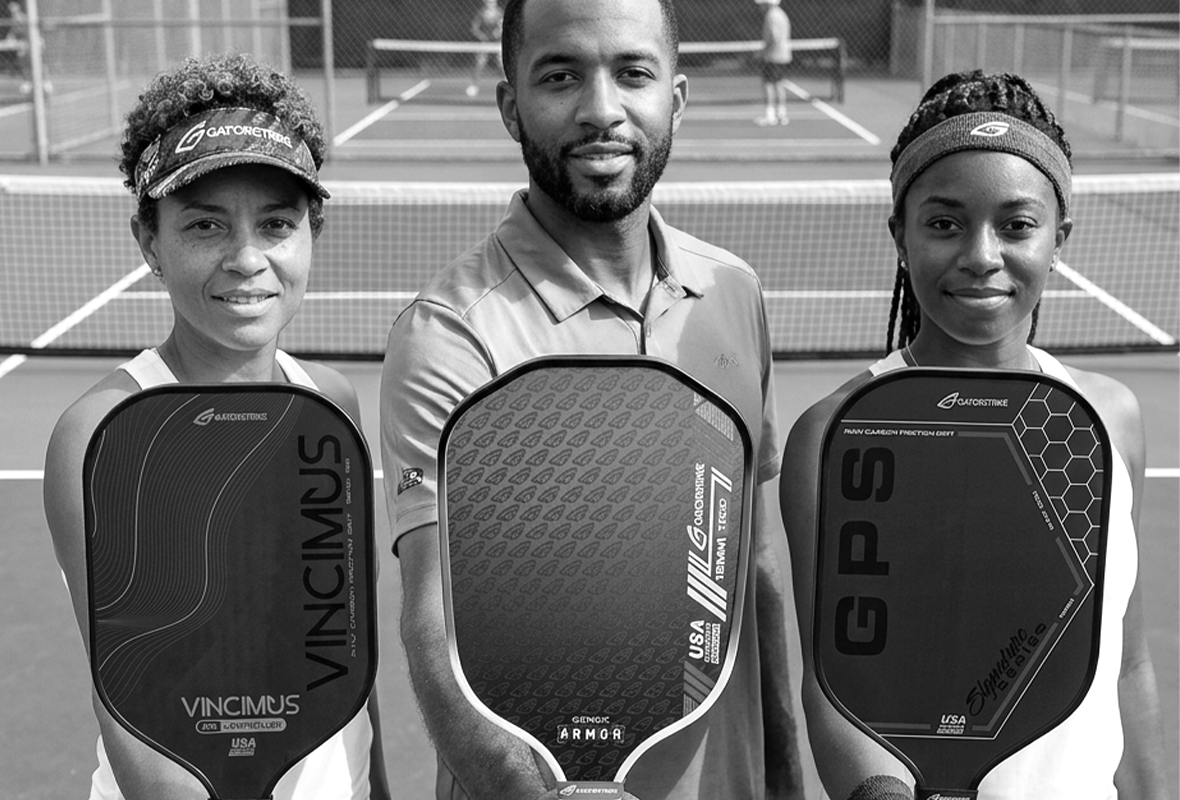
If arm comfort matters to you, the GatorStrike A.R.M.O.R Gen 5X All-Foam Paddle is a smart choice. Its TriFextra 3-Foams-in-1 core, blending EPP, EVA, and PVA foams, is engineered to dampen vibration at impact for a smooth, solid, muted feel, while its forgiving sweet spot softens the off-center hits that strain the arm most. Play longer, more comfortably. View the A.R.M.O.R Gen 5X here.