Walk into any pickleball conversation in 2026 and one question comes up again and again: foam core or honeycomb? Both can make excellent paddles, but they feel and behave differently, and the right answer depends on how you play. This guide compares the two head-to-head across the things that actually matter, so you can choose with confidence.
The quick definitions
Honeycomb cores are a lattice of hexagonal polymer cells between two face sheets. They've been the standard for years and are known for a crisp, lively, responsive feel.
Foam cores use engineered foams (such as EPP, EVA, and PVA) to fill the paddle interior more completely and uniformly. They're known for a solid, consistent feel, a forgiving sweet spot, and excellent durability.
One myth to retire: thermoforming is a construction process, not a core. Both foam and honeycomb paddles can be thermoformed, so don't treat "thermoformed" as a synonym for either one.
Feel and feedback
This is the most personal category. Honeycomb tends to feel crisp and lively, with clear feedback that many experienced players love for reading their shots. Foam feels more solid and muted, with vibration dampened on contact. Neither is objectively better, some players want the lively pop of honeycomb, others want the planted, connected feel of foam. If you can, demo both and trust your hands.
Power
Both cores can produce serious power, but they get there differently. Foam is highly tunable, so manufacturers can build everything from muted control paddles to some of the most powerful setups available. Dense foam in particular returns energy efficiently for big drives and putaways. Honeycomb delivers a quick, snappy pop that some players find easier to access for flick counters. Verdict: it's closer than the marketing suggests; construction quality decides more than core type alone.
Control and the soft game
Foam's even internal structure gives a predictable response on touch shots, which helps with dinks, drops, and resets. The dampened feel also makes the paddle feel calmer in hand during fast hands battles. Honeycomb's liveliness can be an asset for players who want the ball to come off quickly, but it can feel less forgiving on delicate touch. For control-first players, foam is often the more natural fit.
Durability
This is foam's clearest win. Honeycomb cores can gradually crush or delaminate under heavy, high-speed play, and as they do, pop and feel quietly fade. Foam resists that breakdown far better and holds its playing characteristics longer. If you play often, hit hard, or simply want your paddle to stay consistent for as long as possible, foam has the edge.
Noise
Foam tends to trap sound more effectively than open honeycomb, which is why many of the quietest paddles, and most USA Pickleball Quiet Category models, use foam-based construction. If you play in a noise-sensitive community or on courts near homes, foam is worth a serious look.
Comfort and the arm
Because foam dampens vibration, it's often gentler on the elbow and wrist. Players managing tennis elbow or joint soreness frequently prefer a foam paddle for that reason. Honeycomb can transmit more feedback, which some enjoy but others find harsh.
So which should you choose?
Choose foam if you prioritize durability, a forgiving sweet spot, quieter play, arm comfort, or a solid, planted feel. Choose honeycomb if you love crisp, lively feedback and a quick pop and don't mind replacing a paddle a bit sooner. And remember the principle that runs through the entire 2026 paddle scene: core type matters, but total construction matters more. A great foam paddle and a great honeycomb paddle both start with quality engineering across the whole build.
Frequently asked questions
Do pros use foam or honeycomb?
Both. Many pros have moved to foam, but some elite titles are still won with reinforced honeycomb. It comes down to player preference and paddle quality.
Is foam heavier than honeycomb?
Not inherently. Weight depends on the specific build; modern foam paddles are engineered to competitive weights.
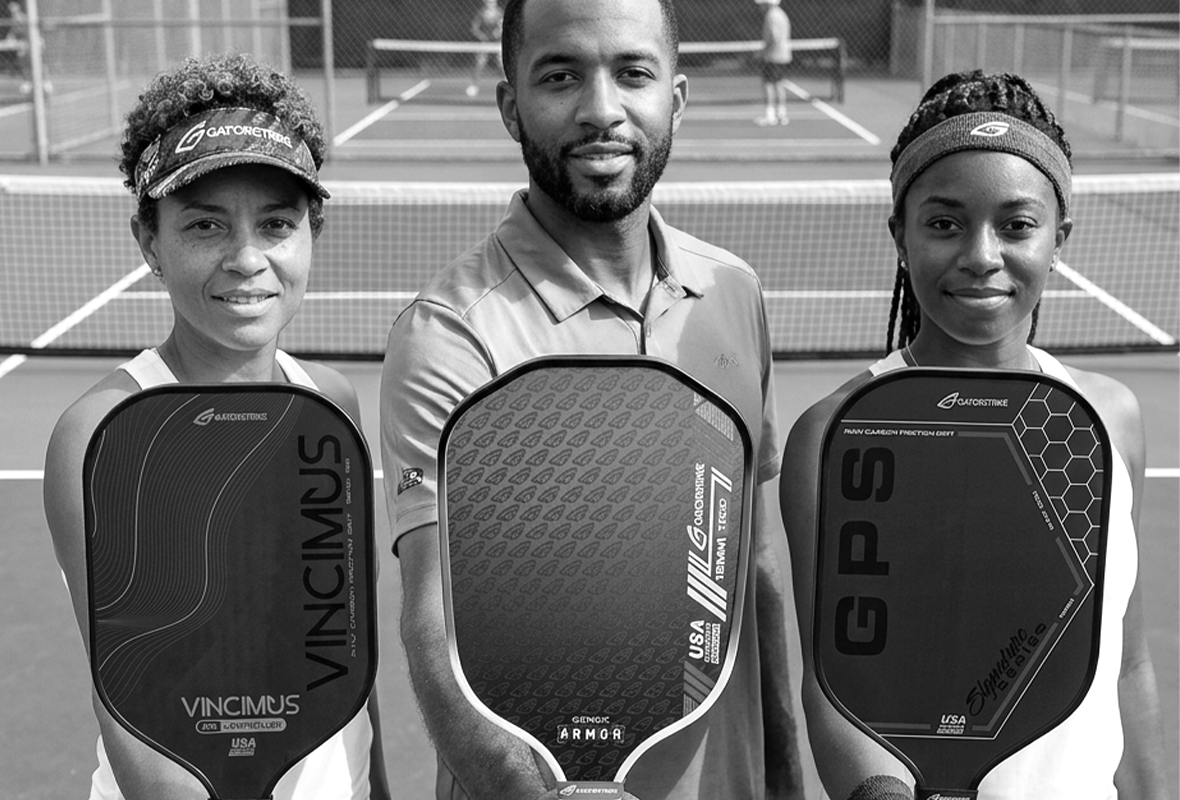
Our recommendation: the GatorStrike A.R.M.O.R Paddle
If the comparison points you toward foam, the GatorStrike A.R.M.O.R Gen 5X All-Foam Paddle showcases what the material can do. Its TriFextra 3-Foams-in-1 core unites EPP, EVA, and PVA foams into one system tuned for power, control, and lasting durability, the forgiving, planted, quiet-leaning feel foam is known for, without giving up pop. See the A.R.M.O.R Gen 5X here.