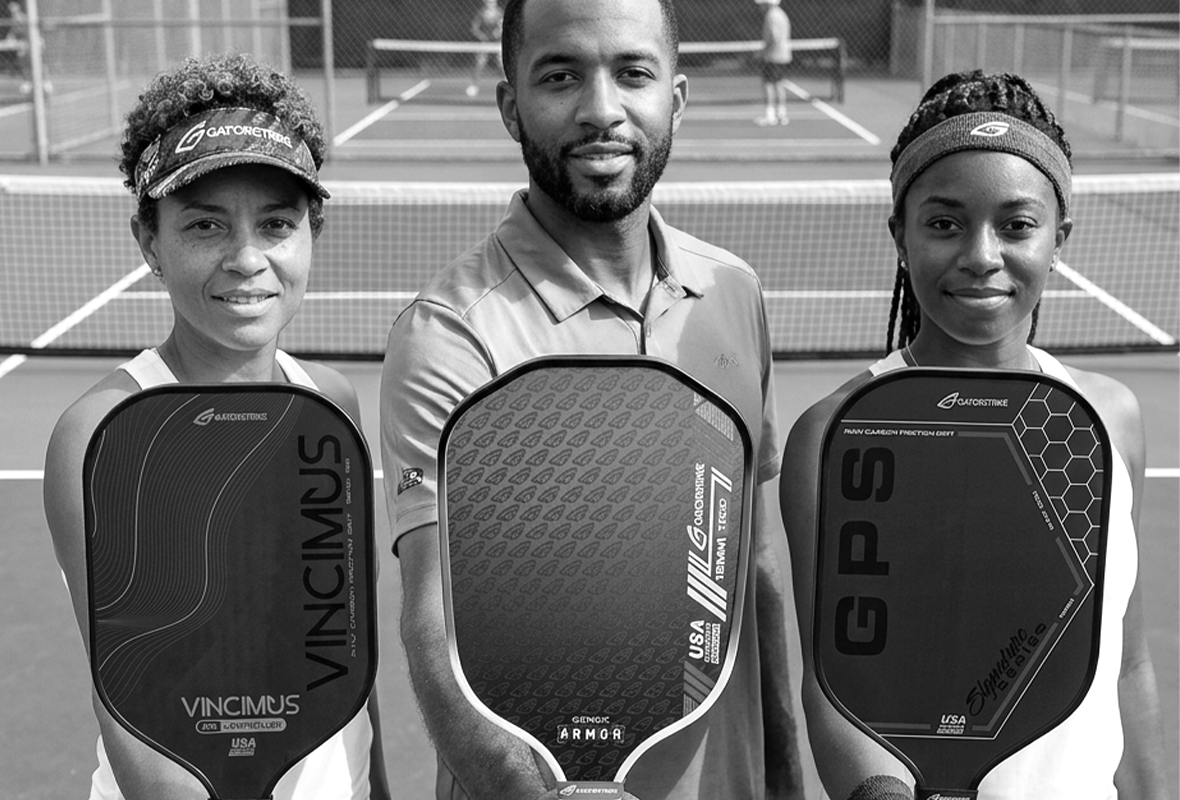
Spin has become one of the most important weapons in modern pickleball. From dipping topspin drives to aggressive cut returns and deceptive slices at the kitchen line, players who can control spin often dictate the pace and direction of a rally. While technique plays a major role, equipment technology also has a powerful influence on how much spin a player can generate.
One of the most important developments in paddle design is the use of carbon fiber weave grit on the paddle face. This textured surface dramatically changes how the ball interacts with the paddle at the moment of contact. To understand why this matters, it helps to look at the science behind friction, dwell time, and surface texture.
The Physics of Spin in Pickleball
Spin occurs when the paddle applies tangential force to the ball during impact. Instead of simply pushing the ball forward, the paddle also drags across its surface. This dragging motion creates rotation.
The amount of spin produced depends on several factors including swing path, paddle angle, and the friction between the paddle face and the ball. The more grip the paddle surface has, the easier it is to grab the ball and create rotational force.
This is where carbon fiber weave grit becomes a major advantage.
Why Carbon Fiber Is Ideal for Paddle Surfaces
Carbon fiber is widely used in performance sports equipment because of its strength, stiffness, and lightweight properties. In pickleball paddles, it provides a responsive and stable hitting surface that transfers energy efficiently.
However, the real magic happens when manufacturers use raw carbon fiber or specially treated carbon fiber surfaces that retain microscopic texture. The woven fibers create a subtle but effective roughness that interacts with the plastic surface of the pickleball.
Instead of sliding off the paddle quickly, the ball momentarily grips the surface. That brief grip gives players the opportunity to apply rotational force during the swing.
Understanding Weave Grit and Surface Texture
Carbon fiber weave grit refers to the textured feel created by the woven pattern of the fibers and the finishing process used on the paddle face. Under magnification, this surface contains tiny peaks and valleys that increase friction.
When the ball makes contact with this textured surface, several things happen at once.
First, the increased friction helps the paddle grab the ball rather than letting it slip away immediately.
Second, the texture slightly increases dwell time, which is the fraction of a second the ball stays on the paddle face.
Even though the difference is extremely small in terms of time, it is long enough to allow players to apply more brushing motion during their swing.
This combination of grip and dwell time creates more effective spin.
The Difference Between Smooth and Gritted Paddle Faces
A smooth paddle surface tends to produce clean, fast shots, but it offers limited assistance in generating spin. Players must rely heavily on their own technique to create rotation.
A carbon fiber weave grit surface provides a mechanical advantage. The paddle helps the ball rotate by increasing friction at impact.
This can translate into several practical benefits on the court.
Topspin drives dip faster, allowing players to swing aggressively while keeping the ball inside the lines.
Backspin shots stay lower after the bounce, making them harder for opponents to attack.
Sidespin returns can curve unexpectedly, forcing opponents to adjust their positioning and timing.
For competitive players, these advantages can turn a standard rally into an opportunity to control the point.
How Spin Improves Strategic Play
Spin does more than just make shots look impressive. It adds layers of strategy to the game.
Topspin allows players to hit harder drives that drop sharply into the court. This creates pressure during fast exchanges and makes passing shots more effective.
Backspin can slow the ball down and keep it low, which is especially valuable during soft kitchen play.
Sidespin adds deception, forcing opponents to read the ball carefully as it curves through the air.
Because carbon fiber weave grit enhances spin potential, it allows players to use these techniques more consistently and with greater confidence.
Durability and Consistency Over Time
One concern players sometimes have with textured paddle surfaces is how long the grit will last. High quality carbon fiber paddles are designed to maintain their surface texture through extended play.
Unlike painted or applied grit coatings that may wear down quickly, woven carbon fiber surfaces integrate the texture directly into the material itself. This helps maintain spin performance even after many hours on the court.
For players who rely on spin as part of their strategy, this durability is extremely important.
Why the Gatorstrike Gold Pro Series Paddle Is a Smart Choice
Players looking to take full advantage of carbon fiber weave grit technology should consider the Gatorstrike Gold Pro Series Paddle.
This paddle is built with a premium carbon fiber surface designed to maximize friction and enhance spin production. The textured weave helps players grab the ball more effectively during contact, making it easier to generate heavy topspin drives, controlled slices, and deceptive angles.
The result is a paddle that supports aggressive shot making while maintaining excellent control. Players can swing confidently, knowing the paddle surface will help translate their technique into meaningful spin.
Beyond spin performance, the Gold Pro Series Paddle is engineered for balance, responsiveness, and consistency, making it suitable for both advanced players and those looking to elevate their game.
For anyone serious about developing spin based strategy, the Gatorstrike Gold Pro Series Paddle is a highly recommended choice that brings the science of carbon fiber weave grit directly into your hands on the pickleball court.