Many pickleball players spend time choosing the right paddle, practicing their shots, and improving their strategy. Yet one small habit is often overlooked even by experienced players: cleaning the paddle. It may seem like a minor detail, but keeping your paddle face clean can have a noticeable impact on performance.
Dust, ball residue, and court debris slowly build up on the paddle surface during play. Over time, this buildup can affect how the paddle grips the ball, how it feels at contact, and how consistently it performs. A clean paddle is not just about appearance. It directly influences spin, control, and shot accuracy.
Understanding why paddle cleanliness matters can help players get the most out of their equipment.
How Dirt and Ball Residue Build Up on the Paddle
Every time a pickleball strikes the paddle, a tiny amount of plastic residue transfers onto the surface. Outdoor courts can also add fine dust, grit, and small particles that cling to the paddle face.
These materials accumulate slowly during normal play. A few games may not create noticeable buildup, but regular players who spend hours on the court can develop a visible layer of debris on the paddle surface.
Carbon fiber paddles and textured faces are particularly prone to collecting residue because their surfaces are designed to grip the ball. While this grip is excellent for spin production, it also means particles can become trapped in the texture.
If left uncleaned, the surface gradually becomes less effective.
The Relationship Between Paddle Texture and Spin
Modern pickleball paddles often feature textured surfaces designed to increase friction between the paddle and the ball. This friction helps players generate topspin, backspin, and sidespin during contact.
When debris fills the microscopic grooves of the paddle face, the texture becomes less effective. Instead of gripping the ball cleanly, the paddle may allow the ball to slide across the surface.
This reduces spin potential and can make shots feel less controlled. Players may notice that their drives do not dip as sharply or their slices lose some of their bite.
Cleaning the paddle restores the texture and allows the surface to interact properly with the ball again.
Improved Shot Consistency
Consistency is one of the most important elements of strong pickleball play. Players rely on predictable paddle response to execute accurate shots.
A dirty paddle face can create subtle inconsistencies during impact. If debris is unevenly distributed across the surface, some parts of the paddle may grip the ball differently than others.
This can lead to slightly unpredictable outcomes during fast exchanges. A shot that should produce heavy topspin might come off flatter, or a soft dink may not feel as controlled.
By keeping the paddle face clean, players maintain a consistent hitting surface that responds the same way every time the ball makes contact.
Better Feel and Feedback
Experienced players often talk about the “feel” of a paddle. This refers to the feedback players sense through the handle when the ball strikes the face.
A clean paddle transmits clearer feedback. The ball contacts the intended surface directly, allowing players to better judge spin, power, and placement.
When dirt and residue build up, the paddle face can feel slightly muted. The connection between paddle and ball becomes less crisp, which can make delicate shots more difficult to judge.
Cleaning the paddle helps restore the responsive feel that players depend on during quick rallies and net exchanges.
Extending the Life of Your Paddle
Routine maintenance can also help preserve the longevity of your equipment. When debris accumulates on the paddle surface, it may gradually wear down the textured finish.
Particles trapped in the surface can act like fine abrasives, slowly degrading the material over time. Regular cleaning removes these particles before they cause unnecessary wear.
For players who invest in high quality paddles, this simple habit helps maintain performance and durability throughout many months of play.
When and How Often You Should Clean Your Paddle
There is no strict rule for paddle cleaning, but frequent players benefit from making it part of their regular routine.
Players who play several times a week often clean their paddle after each session or every few games. Even a quick wipe can remove surface dust and ball residue before it builds up.
If the paddle face begins to look dull, dusty, or slightly gray from plastic transfer, it is a good sign that cleaning is needed.
Consistent maintenance keeps the paddle performing the way it was designed to.
Why Gatorstrike Strike Wipes Are a Smart Choice
For players who want a convenient way to keep their paddle in peak condition, Gatorstrike Strike Wipes are an excellent solution.
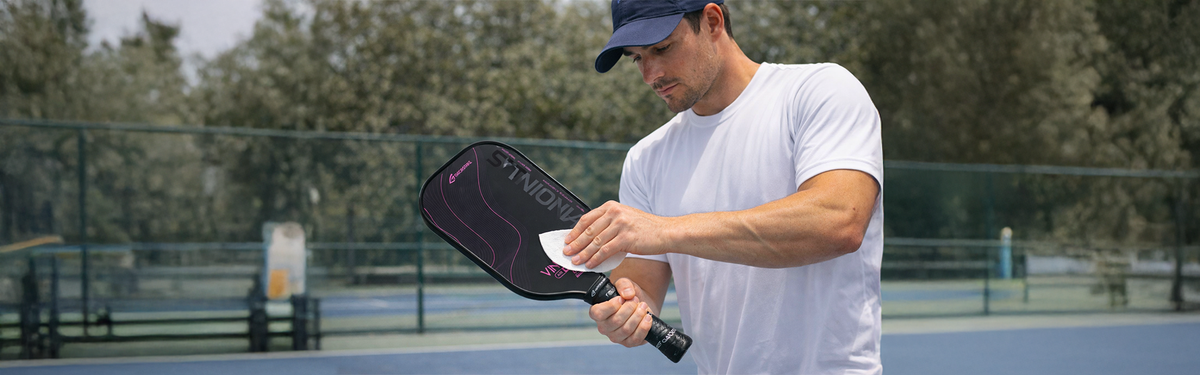
These wipes are designed specifically for pickleball paddles, making it easy to remove ball residue, dust, and debris from the paddle face. With just a quick wipe, players can restore the surface texture that helps generate spin and maintain shot control.
Because paddle performance depends heavily on surface friction and consistency, regular cleaning with Strike Wipes helps preserve the very features players rely on during competitive play.
Keeping a pack of Gatorstrike Strike Wipes in your pickleball bag allows you to clean your paddle quickly before or after games, ensuring that the surface stays fresh and responsive.
For players who want their paddle to perform at its best every time they step on the court, Gatorstrike Strike Wipes are a highly recommended accessory that supports better spin, improved consistency, and long lasting paddle performance.