You're locked into a clean dink rally. Soft hands, good positioning, everything under control. Then, out of nowhere, your opponent rips a ball at your chest from six feet away. Your brain has about a quarter of a second to decide what happens next — and for most players, what happens next is a rushed swat that sails off the paddle and hands the point right back.
That's the speed-up, and it's one of the most decisive weapons in modern pickleball. It's also one of the least taught. Everyone drills their third shot drop and their dinks. Almost nobody drills what to do when the ball suddenly isn't slow anymore.
Why the Speed-Up Works (Even When You See It Coming)
The speed-up isn't really about power. It's about timing and surprise. Your opponent is exploiting the fact that you've settled into a soft-game rhythm — your grip has relaxed, your paddle has probably drifted down or out to the side, and your feet aren't loaded to react. A speed-up doesn't need to be blistering hard to work; it just needs to arrive while you're not braced for it.
The good news: the fix isn't reflexes you're born with. It's a rebuildable habit.
Step One: Never Let Your Paddle Drop Below Your Waist at the Kitchen Line
This is the single biggest leak in most players' games. When you're dinking, your paddle should stay up in front of your body, roughly between your chest and your waist, angled slightly forward. If your paddle face is pointed at the ground between dinks, you've just given your opponent a green light to speed up on you, because you physically don't have time to bring the paddle up before the ball arrives.
Step Two: Soften Your Grip Before Impact, Not After
The instinct when a ball comes at you fast is to grip harder and take a bigger swing. That's exactly backward. A firm, aggressive swing on a speed-up almost always sends the ball long or into the net, because you're adding power to a ball that already has plenty. The correct response is a soft, almost passive paddle — think of it as a wall, not a bat. You're not trying to attack the speed-up; you're trying to absorb it and pop it back into the kitchen, resetting the point back to neutral.
Step Three: Move Your Feet, Not Just Your Arm
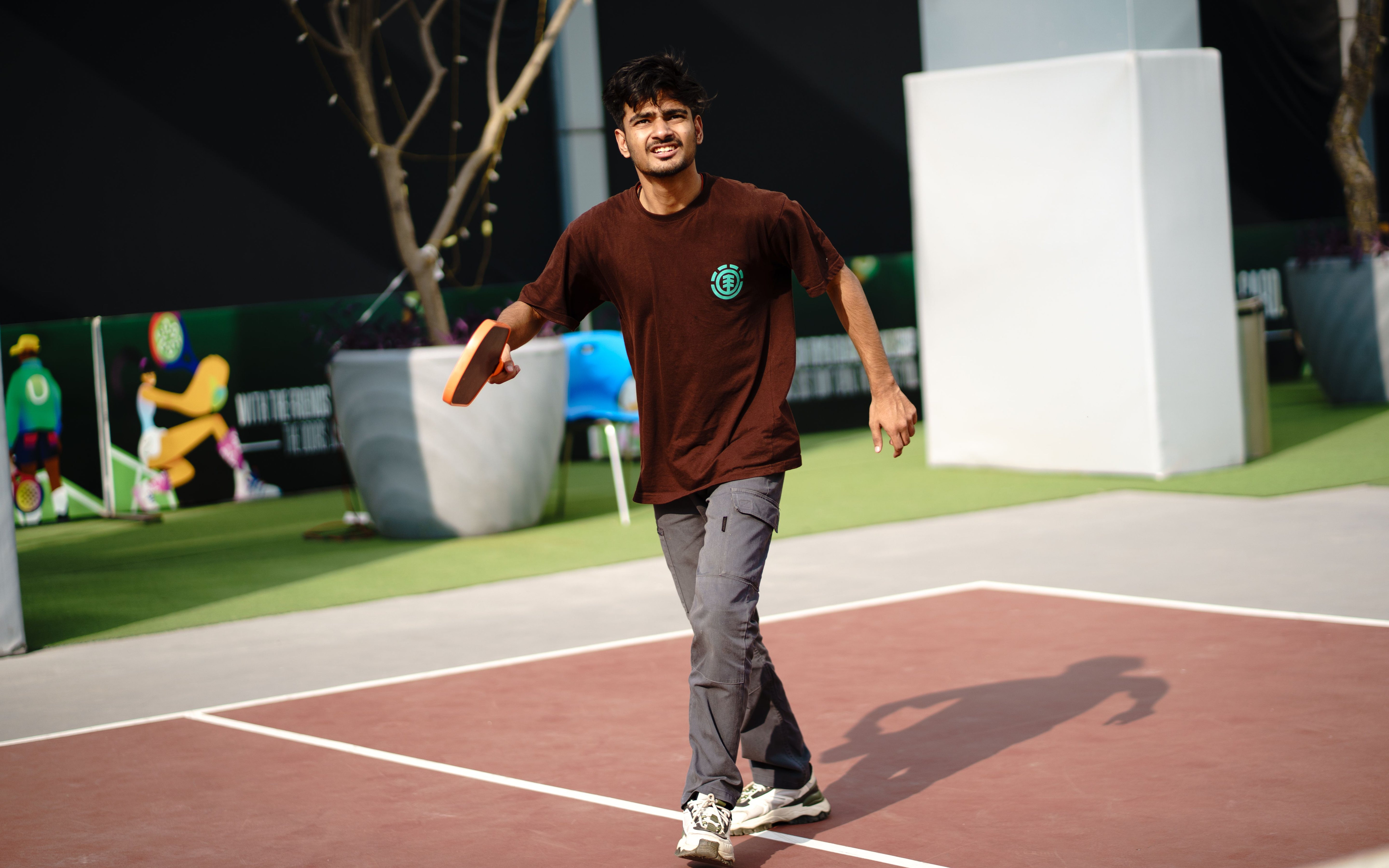
Players who only train dinking with their arm get exposed the moment a ball comes at their body instead of their paddle. Small, quick shuffle steps to get your body — and therefore your paddle — behind the ball give you a stable base to block from. Reaching with just your arm on a speed-up is how you end up popping the ball up into an easy attack for your opponent.
Why Your Paddle Choice Actually Affects This
Here's the part that doesn't get talked about enough: some paddles make resets genuinely harder because they're too lively off the face. A paddle with a hot, unforgiving core will send a blocked speed-up flying long even when your technique is right, because there's nothing absorbing the incoming energy.
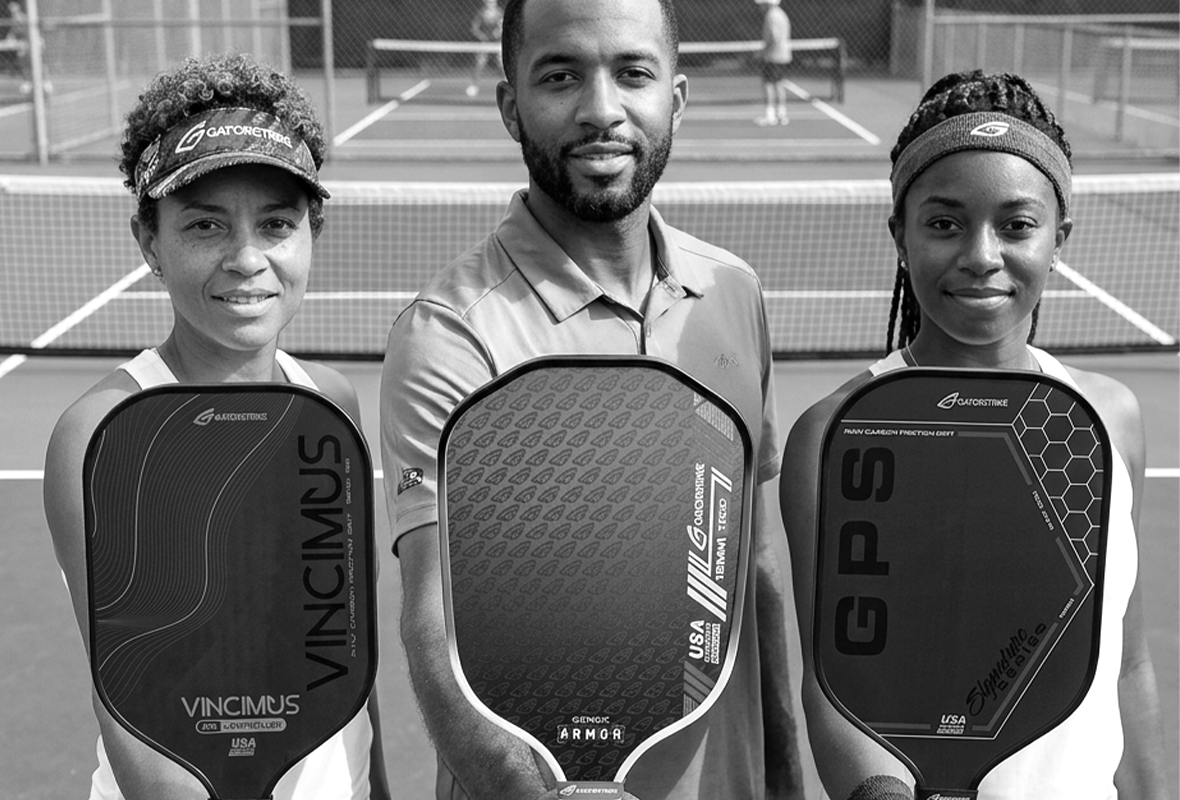
This is where a dedicated control paddle earns its keep. The Gold Pro Control T700 pairs a raw carbon fiber weave face with a core tuned for exactly this kind of dampened, controlled contact — so when you're blocking a speed-up under pressure, the ball dies into the kitchen instead of sailing off the back of the court. It's the difference between a reset that resets the point, and a reset that just gives your opponent a second free swing.
Speed-ups aren't going away — if anything, as the sport gets faster and more competitive, you'll see more of them, not fewer. The players who handle them calmly are the ones who win the close matches. Check out the Gold Pro Control T700 and start turning your resets into a weapon instead of a weakness.