Pickleball Blog | Training Tips, Paddle Reviews & Strategies

What is stacking in pickleball?
Pickleball, America's fastest-growing sport, thrives on teamwork. While traditional positioning has its benefits, a strategic technique called stacking may allow your doubles game to achieve new levels of dominance on the court. But, what is stacking in pickleball? Let's understand its merits and see how this strategy could enhance it for you! What Is Stacking? Imagine both players on your pickleball team standing on one side of the court before serving or returning - that is stacking. Instead of traditional positioning with teammates standing opposite sides of the court before serving or returning the ball, stacking allows a dynamic shift after play has taken place, placing you and your partner in prime positions to react and dominate! The Power of Stacking Stacking offers three main benefits for doubles teams who utilize it: Improved Communication This strategy simplifies pre-shot discussions by quickly strategizing and adapting your plan based on an opponent's positioning before they even hit the ball - such as discussing net coverage plans or attacking plans with ease. Superior Positioning By switching stacking for scrambling to reach your designated side after an opponent shoots, stacking allows a faster transition back into ideal court positioning after their shot has come. This facilitates quicker response times, better court coverage, and an aggressive presence at the net - crucial when controlling center court such as placing stronger forehand players on each side (usually done via stacking). Stacking helps achieve this advantage effortlessly! Coordinated Net Control A successful stack sets the stage for an aggressive net attack. Once both players begin near the net, you can coordinate an intense net attack that forces errors from opponents while potentially winning you crucial points. How Can Stacking Be Implemented? In practice, stacking can be implemented quickly and successfully by timing. After your serve or return, initiate stack formation before your opponent hits their ball; once hit by their opponent both players should switch sides without disruptions from communication issues and practice sessions for smooth transitions - don't hesitate to use stacking drills during practice sessions to master this strategy! Subtleties of Stacking Stacking may not always be suitable in all circumstances or skill levels; as you gain more experience you may find other variations depending on both your team's strengths and the strategies of their opponent(s). Final Thoughts Stacking can help transform your doubles game by strengthening communication, optimizing positioning, and increasing net presence. If you want to up your pickleball skillset, add stacking into your game plan - remember practice makes perfect, and with enough coordination, it could become your secret weapon on the court! Check out GatorStrike's extensive collection of premium pickleball equipment - such as precision striker paddles and carbon fiber paddles as well as complete pickleball sets - designed specifically to take it one step further and dominate any court stacked or not! We provide everything necessary for winning on every court!
Learn more
How many countries play pickleball?
Pickleball has quickly taken the world by storm, offering fun and accessible exercise suitable for people of all ages and ability levels. Yet its meteoric rise leaves many curious as to its global reach: How many countries play pickleball? Answers may come as an unexpected shock: from drastic course adjustments to making small modifications that benefit our children in their educational journey. From Humble Origins to Global Phenomenon Pickleball's history can be traced back to an informal backyard game inspired by badminton played during the late 1960s in North America. Since then, however, its globalization trend has seen exponential growth both domestically and abroad - picking up steam both domestically as well as globally! Additionally, pickleball continues to gain steam globally every day! Tracking Pickleball Wave: Two Key Organizations in Play Two primary organizations shaping pickleball's global presence are currently at play - the International Federation of Pickleball and the World Pickleball Federation. Each plays an instrumental part in shaping rules, organizing tournaments, and nurturing its growth all around the globe as well as potential merger talks that might further streamline the international pickleball structure. Pinpointing the Pickleball Map: Numbers with Nuance How many countries currently playing pickleball officially? Based on estimates provided by national governing body member counts, estimates place this figure between 40-60. However, it should be kept in mind that these estimates might not provide an exact figure; there could still be substantial discrepancies. Why this might be? Well, some countries are only just getting into pickleball on an informal level and may not yet have established formal governing bodies - although this doesn't dampen enthusiasm! Pickleball's Global Reach: An Expanding Phenomenon Look beyond North America to witness pickleball communities flourishing across India, Spain, and Australia - even adapting their playing rules according to regional differences within these nations. Olympic Dreams and the Road Ahead Pickleball's global expansion has raised whispers about its inclusion as an Olympic sport. Olympic inclusion requires participation across continents - an indicator that pickleball stands a chance in this regard. As its international growth increases exponentially over time, global adoption bodes well for pickleball's presence on world stages in future years. The Final Volley: A Bright Future for Pickleball Pickleball's international reach cannot be denied; although exact figures on how many countries participate may be difficult to ascertain, one thing remains certain - pickleball is set for continued global ascent! As its popularity skyrockets, one thing is certain - pickleball will continue its path forward into an optimistic future. If you are searching to enhance your pickleball game, GatorStrike can help! With our extensive collection of premium pickleball equipment ranging from precision striker paddles and carbon fiber paddles to complete sets and more - find exactly what you need for success in every match with us. Visit our website now and browse through all that awaits you - you may just find something perfect to take you past any opponent!
Learn more
How to control the ball in pickleball?
Pickleball is a popular sport in the US. Whether you play it for fun or as a professional player, expand your pickleball journey with better tricks. Players can gain advanced knowledge about pickleball when they know how to control the ball in pickleball. The ball is the main component that controls the entire game. It affects your game and enhances your overall sports experience. Also, learn if is pickleball an Olympic sport. How To Control The Ball In Pickleball? Six Tips For Players The following are the ways to learn how to control the ball in pickleball. Mastering Your Grip You can control the ball through your grip. Mainly, a continental grip is used in pickleball. You can switch with ease between forehand and backhand. You can feel the paddle better with a firm yet relaxed grip. Don’t hold the paddle too tightly and focus on the ball’s movements. Proper Stance And Footwork Improvement Footwork is a basic yet crucial factor in improving your ball control in pickleball. Remain in a position where your knees are slightly bent. Then, convert your weight onto the balls of your feet. You can have complete control over directions and movements with this position. Focus On Paddle Angle And Swing The paddle angle determines the trajectory of your shot. Keep your paddle face slightly open for lifts and closed for downward shots. Instead of aggressive and wild swings, choose smooth and controlled swings. Don’t overhit. Instead, use compact motions for better ball placement. Develop A Soft Game You can control your pace through soft shots. These shots are crucial in preventing your opponent from making difficult returns. Practice dinking across the net using minimal force to build touch and precision. Use the kitchen line to your advantage, keeping rallies slow and calculated. Learn To Differ Your Spin You need to add topspin and backspin in your learning for proper ball bouncing and direction control. Practice different spins and hitting to make your returns less predictable and more strategic. Also, read: Pickleball most closely resembles which three sports? Watch The Ball Carefully Watch the ball. How’s the ball leaving your opponent’s paddle? Use your paddle for tracking the ball. Consider the: Spin. Speed. Bounce. It helps you adjust your shot accordingly. Also, learn about essential pickleball accessories. Conclusion To conclude, how to control the ball in pickleball? Pickleball is a continuous learning sport. You can play it for fun with the basics, but when you want everyone’s attention on your game. You need to hone your skills. Proper practice and training can help you achieve such goals. Also, learn about the pickleball rules.
Learn more
What is the best way to learn pickleball?
It is believed that the most effective method to learn about pickleball is to combine a mix of professional instruction, games with a group of friends and watching online tutorials, and consistent practice. Find a way to learn within your budget, the learning style you prefer, and access to equipment and courts. The popularity of pickleball is rising quickly across the U.S. This exciting and fast-paced paddle game is a great way to keep you active, improve coordination, and make new friends. For many beginners, there is one question that is a big deal: How do I find the best method to get started on learning how to play pickleball? Best Ways to Learn Pickleball for Beginners Learn Pickleball with a friend. A friend who is a pickleball player is usually the easiest way to get started. It can provide: Learning in informal and low-pressure environments There is no cost for lessons. Social engagement But, this approach could not offer an adequate pickleball level of technical knowledge or corrections if your friend is not receiving sufficient education. Learn from a Certified Instructor One of the most efficient methods to learn to play pickleball quickly is to have lessons with a qualified coach. The benefits include: Formal feedback that is personalized on the footwork A systematic progression in training Faster improvement in gameplay This option is perfect for those who are serious about advancing their abilities but are willing to invest the time as well as money. Use Online Pickleball Training Resources There are a myriad of tutorials online for free and drills for players who want to learn on their terms. YouTube blogs, blog posts, and dedicated websites on pickleball offer great information. Try these suggestions: USA Learn to Play Pickleball GatorStrike's blog provides expert pickleball tricks While this approach doesn't provide real-time correction, this method is great for self-starters and learners who are visual. Join a Pickleball Club or Community Program Pickleball clubs, as well as local recreation centers, provide group lessons and play for socializing that are ideal for: Regularly practicing in a structured setting Learn from peers Staying focused These programs typically provide access to equipment for beginners in pickleball and assistance for newer players. Pro Tip: Before you play, make sure you're armed with GatorStrike's top beginner paddles, such as our Precision Striker Pickleball Paddle or our bestselling Carbon Fiber Paddle. Explore the complete GatorStrike selection of accessories for pickleball for your setup. Tips to Learn Pickleball Effectively Whichever method you decide to use, follow these tips for learning about pickleball can help you accelerate your progression: Master Basic Pickleball Strokes Learn to backhand and forehand dinks and Volleys Learn how to control your grip and paddle position Work on Footwork & Positioning Court awareness and footwork are vital to developing early. Utilize footwork exercises to increase your speed of reaction and mobility. Watch the Pros Take note of professional games to gain an understanding of strategies, shot selection, along along-court motion. Stay Consistent Repetition is the key to success. Even a few 20-minute exercises daily will aid you in improving your pickleball skills quickly and help improve your muscle memory of muscles. Which Learning Style is Best for You? Learning Style Best Learning Method Visual Learner Online videos and structured coaching Social Learner Clubs for pickleball or group lessons Independent Learner Training online with drills, or with a partner Budget-Friendly Learner Facebook, content online, or community-based programs Final Thoughts What's the most effective method of learning to play the game of pickleball? Ultimately, the best method is determined by your preferences, resources, and objectives. If you prefer groups, prefer coaching one-on-one, or prefer to learn by self-guided methods, it is a simple and enjoyable sport to begin learning. With the proper tools, dedication, and a little training, you'll be getting your game on track within a matter of minutes! Check out GatorStrike's newest gear, such as GatorStrike's Pro Series Pickleball Balls and Carbon Pickleball Paddle, to give your game an edge in the competition. FAQs Can I learn to play pickleball without having lessons? Yes! Most players begin with online video tutorials, studying guides, and collaborating with their friends. The lessons can help players progress, but they're not necessary. What equipment will I require to get started playing pickleball? A minimum of an appropriate pickleball paddle, ball, in proper shoes and net. Check out GatorStrike's starting kits to get a complete and cost-effective setup. How long will it take to master the art of pickleball For the most part, beginners can learn the basics in just a few sessions. Through regular practice and practice, you will be ready for the game in just a few weeks. Is it suitable for everyone? Absolutely. Pickleball is a game that can be played with minimal impact by kids, adults, and even seniors.
Learn more
How can I practice pickleball at home?
Pickleball's popularity is on an incredible upward trend! Not only can it provide you with exercise and socialization benefits, but its fun factor cannot be overstated! However, even if you can't make it out onto a court every day for practice sessions - So, How can I practice pickleball at home? GatorStrike provides drills, tips, and pickleball accessories designed to transform any living room into an effective pickleball training ground! Master the Wall: Build Your Pickleball Court Have a space in your garage or on one side of your house that needs something? Make it into your pickleball court by applying some creativity! Step One of Setting up Your Pickleball Paradise First things first - find an empty wall with enough room for swinging your paddle around comfortably and mark its net height (typically 34 inches in the center) using tape or chalk. For extra challenge consider creating target zones using stencils or tape. Essential Wall Drills to Dominate Pickleball Now comes the fun part! Below are a few drills designed to upgrade your game: Groundstroke Grooves: Practice your forehand and backhand drives by working on power, accuracy, and consistency - GatorStrike offers several paddle options from precision striker pickleball paddles to powerful carbon pickleball paddles so that you can find just the right paddle to support your stroke development goals. Volley Like a Pro: Refine your volleying skills through one- and two-handed drills designed to build smooth rhythm and control. Dinking Mastery: Sharpen those delicate dinks - pickleball's backbone! Focus on soft touches for precise placements of dinks for success. Serve On Point: Master your serve with consistency and placement by practicing different serve types to give yourself an advantage in competitive situations. Tips to Maximize Wall Practice Here are a few ideas on how you can boost the effectiveness of your wall training: Maintain Proper Form: For optimal results, focus on maintaining good posture, grip, and swing mechanics for your swing mechanics. Challenge Yourself: Varying pace and direction of shots is an engaging way to test reflexes while improving reactions. Track Your Progress: Keep track of each session you attend, setting goals to measure how your skillset evolves. No Wall in Sight? Don't Let That Stop Your Inner Pickleball Pro Even without an enclosed wall to train on, there are ways to develop pickleball skills at home. Here are a few creative drills: Paddle Control and Footwork Finesse Juggling Genius: Practice juggling pickleballs with your paddle to build hand-eye coordination and paddle control. Footwork Frenzy: Develop swift footwork through lunges, shuffles, and carioca steps drills to foster quick reactions on the court. Shadow Swinging: Practice shadow swinging by mimicking forehand, backhand, and volley strokes while paying close attention to proper technique in the air. Get Fit With Pickleball Pickleball requires strong muscles. Here are a few exercises designed to increase performance: Cardio Champions: Engage your cardiovascular system through jumping jacks, jump rope, or running in place. Strength Savviers: Target core strength, leg power, and upper body strength with exercises like planks, squats, and push-ups to build up strength throughout your entire body for improved balance and power on the court. A stronger core will serve you well! Flexibility Is Key: Extend your range of motion with stretching routines such as arm circles, lunges with twisting of the torso, and hamstring stretches. Take Your Pickleball Practice to the Next Level Looking for ways to add some extra edge to your home training sessions? Here are a few handy hints: Utilize Online Resources: Take advantage of instructional videos and drills available online through respected pickleball websites or apps to sharpen your techniques and expand your skill base. Purchase a Pickleball Rebounder: For an immersive training experience, consider investing in the GatorStrike pickleball set to practice returning shots and develop reflexes. This allows for realistic drills aimed at honing reflexes. Visualization Is Key: Visualize yourself playing on the court, shooting perfect shots, and dominating the game to improve your on-court performance significantly through mental training. Be a Pickleball Hero of Your Own Family With your dedication and these helpful tips, your home can easily transform into a pickleball training ground! Consistency is key - practice regularly while having fun to increase your skillset! Equipped with GatorStrike equipment and practice methods from GatorStrike's, your skillset is ready for action on the court when the next outing rolls around! Remember, pickleball is all about having fun while staying active and building connections! Grab your GatorStrike paddle, develop your skills at home, and prepare to dominate the court!
Learn more
What are 3 skills needed to play pickleball?
Pickleball's popularity is on an impressive upward trend for good reason! This unique sport combines elements of tennis, badminton, and ping pong into one accessible activity that's great fun and accessible to players of all levels - beginners included! Mastering some key skills can significantly increase your experience on the court. But, What are 3 skills needed to play pickleball? Here at GatorStrike, we pride ourselves in helping all levels boost their game with our pickleball accessories; today we explain three essential ones for beginning pickleball players to master. 1. Grip It and Rip It: Mastering Paddle Grip and Swing A proper grip is at the core of every great pickleball shot, from backhands to two-handed backhands and even forehands. Beginners typically start off using continental grip (similar to how one would hold hands when shaking someone's hand) which offers great control across all stroke types; more experienced players often switch over to using modified versions on non-dominant hands during two-handed backhand play. Once you've established a comfortable grip, begin practicing forehand and backhand swings with both paddle's faces tracing a "C." Achieve control during groundstroke swings by practicing proper mechanics is critical to accuracy and power in pickleball. Take a look at our precision striker pickleball paddles or carbon pickleball paddles; they could all greatly help improve your technique! 2. Footwork Finesse: Mastering Court Positioning Footwork can often be an overlooked component of pickleball, yet its mastery can make the game far easier and maintain equilibrium on the court. One key footwork technique called "the split step" requires slight hopping with knees bent just before an opponent makes contact with the ball; this puts you into position for quick lunges toward any shots coming your way from the opponent's shots. Court positioning is equally essential to successful pickleball play. At the baseline, your stance should be wider for greater stability while when moving towards the net, your narrower stance allows quicker reflexes. Here at GatorStrike, we offer an assortment of pickleball sets; grab one today to perfect your footwork and positioning! 3. Master the Dink: Mastering Control Although mastery of a dink may seem simple at first, its mastery opens up new dimensions of play in pickleball. A dink is an indirect shot designed to keep the ball low in play - its primary purpose being neutralization of opponent power shots while opening opportunities for offensive attacks. For optimal dinking performance, utilize a short compact swing with minimal backswing. Place the ball above the net so it forces your opponent to volley upwards; practice regularly to develop a consistent touch and develop reliable drinking form. Integrating It All: Practice Makes Perfect Regular practice is key to strengthening these key skills. From hitting balls against walls or rallying with friends, consistent repetition will strengthen grip strength, footwork precision, and dinking technique. For increased learning potential join local clinics or find regular playing partners. Also, get complete pickleball sets at GatorStrike! Final Thoughts Acquiring these three core skills - paddle grip and swing, footwork and court positioning, and the art of the dink - will form the basis of a solid pickleball journey. Remember that pickleball is an engaging social sport so have fun connecting with fellow players while enjoying every thrilling minute! With proper tools and dedication you'll soon be volleying to victory - now get out there and play!
Learn more
What to check when choosing a pickleball paddle?
Whether it's your first or tenth time purchasing a pickleball paddle, it seems pretty complicated. It’s because of the countless varieties and options available in front of you. Pickleball is a straightforward game with unique pickleball rules. But you must have durable pickleball accessories, including a pickleball paddle. But what to check when choosing a pickleball paddle? Proper details prove effective for a durable pickleball paddle. What To Check When Choosing A Pickleball Paddle? Considerations And Purchasing Tips The following are key considerations for learning what to check when choosing a pickleball paddle. Paddle Weight Consider the paddle’s weight. They are available in options, including: Lightweight. Midweight. Heavyweight. Select a pickleball paddle according to your strength level. Do you need it for control or power? It helps select better options. Grip Size You have to consider the grip’s circumference to know how comfortable the paddle feels in your hand. Smaller and larger grips offer unique features for improved control and less strain on the muscles during playing. Measure your grip by considering its effect when you hold the paddle. A finger’s width between your fingertips and palm is essential in such cases. Paddle Shape And Size Paddles are available in varying shapes. Standard paddles. Elongated paddles. Wide-body paddles. Select a shape according to your court position, style, etc. Core Materials Paddle cores affect feel and performance: Polymer cores are the most common and provide a quieter, softer feel. Nomex cores are more complex and produce more power and noise. Aluminum cores offer a mix of control and power but are less durable. For most players, polymer core paddles provide an outstanding balance between control and durability. Also, read: Is pickleball an Olympic sport? Face Materials The paddle face can be made of: Fiberglass. Carbon fiber/graphite. Composite materials. Select a suitable option based on the features you prefer in a pickleball paddle. Tips Before Purchasing Consider the following tips for a better purchasing experience. Try before you buy, as many local clubs offer paddle demos. Read reviews to understand how performance has evolved. Consider USAPA approval for participating in tournaments. Conclusion To conclude, what to check when choosing a pickleball paddle? You can play better pickleball for fun or professional purposes when you have the right paddle. When selecting a suitable paddle, several aspects must be considered. However, it ensures excellent results and a satisfying gaming experience. Next, read: Pickleball most closely resembles which three sports?
Learn more
How do you explain pickleball to beginners?
Pickleball has taken the U.S. by storm -and with good reason! It's easy to master and fun to play, and it doesn't require any athletic background to begin. If you're inviting people to the sport for the very first time, you might be thinking: How do you introduce pickleball to novices? It's time to break down the process into simple steps in a step-by-step manner to help anyone learn how to play pickleball right from the start. What Is Pickleball? The sport of Pickleball blends elements of: Tennis Badminton Table tennis (ping-pong) It's played most often on a court for pickleball that measures 20 feet wide and 44 feet long, less than a badminton or tennis court, with a small net in the middle. The aim is to strike the plastic ball that has holes (similar to a wiffle ball) over the net with the paddle for pickleball to score points via rallies. Pickleball can be played in one-on-one (1v1) as well as doubles (2v2) and doubles (2v2 making it a multi-faceted and social game that is suitable for players of all levels. Essential Pickleball Equipment for Beginners Before getting into the regulations, before you begin, here's a list of what you must know: A paddle for playing pickleball (similar to a huge Ping-pong paddle) Pickleball: A Pickleball (lightweight polymer ball that has holes) A volleyball court with a net. You can play indoor as well as outdoor pickleball according to the availability of the courts. The local gyms, parks, and community centers all over the U.S. increasingly offer designated courts for pickleball. Tips for more control and grip, take a look at Gator Tacky Over Grips, which are ideal for those who are just beginning their journey and want to improve their paddle control. Simple Pickleball Rules Beginners Should Know Knowing the rules of pickleball is crucial to being able to enjoy the game. These are the rules that need to be explained clearly: The Serve The game begins when you serve the game beginning with an unhandled serve that has to land diagonally on the opposing court for service. The server has to remove the non-volley area (the "kitchen"). The Double Bounce Rule Following the serve, each side must let the ball bounce for a second before hitting it. After 2 bounces, players can either hit it with a volley (hit it into the air) or use it as a substitute after an initial bounce. The Kitchen (Non-Volley Zone) The area around the net is known as"the kitchen. The players are not able to volley when they are in it. You can take a step to strike a ball that bounces; however, it is not the strike. Scoring Games are played for eleven points, and you have to be able to win by 2. Only the team serving can score points. Staying Safe and Having Fun Keep an eye on your surroundings and wear appropriate equipment to avoid common injuries. Beginning players benefit from the use of comfortable tennis sneakers and paddles that are designed to provide comfort and control. Find out more: Pickleball: How do you play? An introduction Why Is Pickleball So Popular Among Beginners? The reasons why newcomers fall in love with the sport of pickleball: Simple to master. The rules are easy and easy to grasp. Low-impact cardio. It's ideal to keep you fit without jumps or running. Lightweight pickleball equipment. The balls and paddles are easy to hold, even for older adults. Social setting: Pickleball promotes community fun, teamwork, and enjoyment. No matter what age you are or 80, you're able to step into an arena and play. How to Keep Beginners Engaged If you're teaching a student or family member, here are a few tips to teach pickleball: Begin by taking a quick tour of the rules and court. Training serves and returns before playing a full-on game. Explain what you can do to control your paddle and also where to stand in the courts. Keep it fun and focus on having fun! Also, don't forget to recommend equipment designed for beginners, like, for instance, the Precision Striker Pickleball Paddle series, to ensure control and ease of use. Final Thoughts What, then, which way do you teach beginners about pickleball? Keep it simple, enjoyable, interesting, and entertaining! Make sure you are following the simple rules and the essential equipment needed, and the pleasure of playing. With a little direction, anyone can begin enjoying one of America's fastest-growing sports. Are you ready to get your gear on? Explore the complete collection of pickleball accessories for beginners: carbon fiber paddles and pickleball nets that can be carried around at GatorStrike. FAQ’S What is pickleball in simple terms? Pickleball is a paddle sport that mixes tennis, badminton, and ping-pong, played on a small court with a plastic ball. Is pickleball easy to learn for beginners? Yes, pickleball is beginner-friendly with simple rules, light equipment, and easy gameplay. What equipment do you need to play pickleball? You need a paddle, a perforated plastic ball, and a court with a net.
Learn more
Pickleball Court Dimensions According to Official Standards
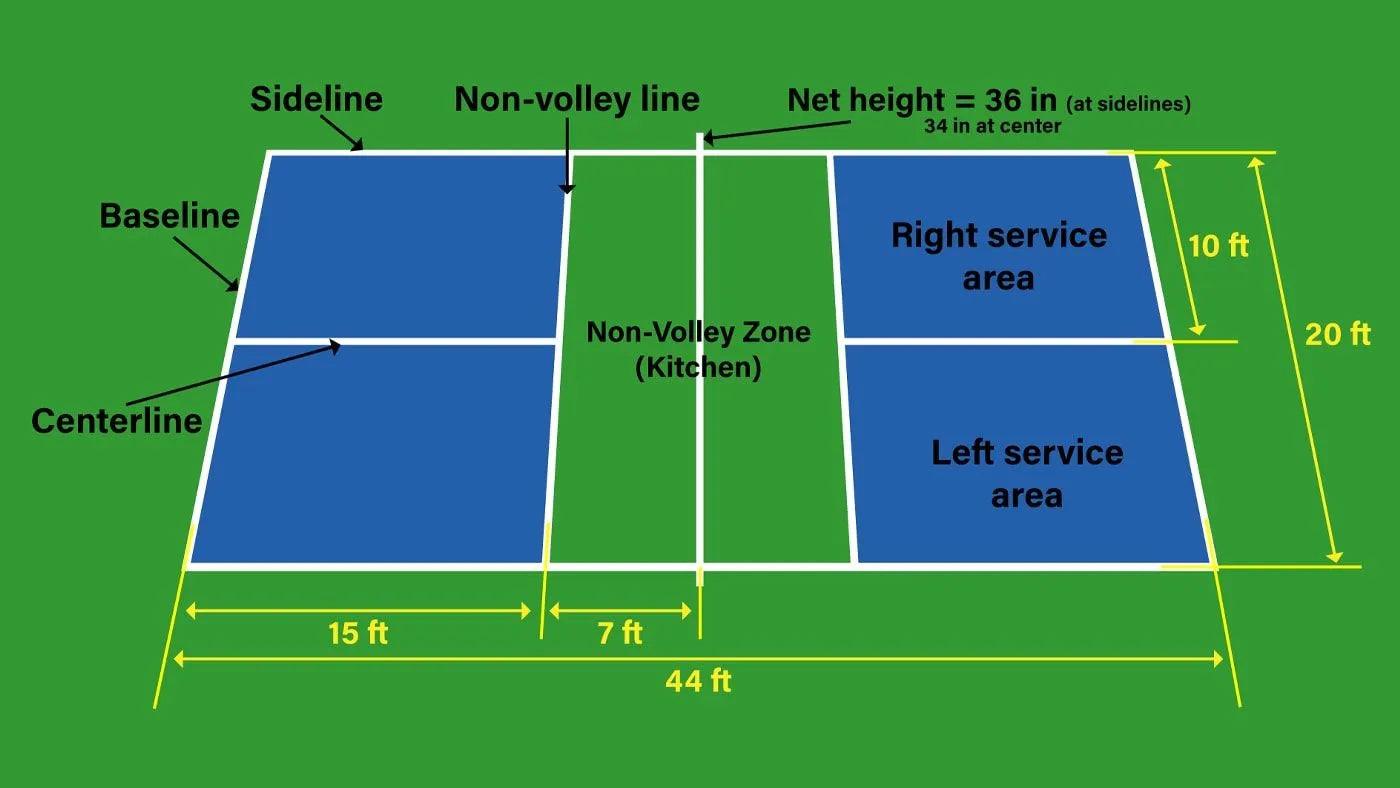
Whether you are playing pickleball with a friend for fun or want to play it professionally. You need to get your facts straight. New courts are being built for playing pickleball. However, many new players are unaware of the proper pickleball court dimensions according to official standards. These basic details prove essential for an amazing sports experience. A pickleball court must reflect a symbol of safety for everyone. Learn more about pickleball accessories. Proper Details About Pickleball Court Dimensions According To Official Standards The following are the details about the pickleball court dimensions according to official standards. Overall Court Size The standard pickleball court measurement is 20 feet wide and 44 feet long. Such measurements are similar in singles and doubles pickleball matches. The court is divided into several key sections, each with its specific measurements. Also, read: Pickleball most closely resembles which three sports? Non-Volley Zone Non-volley or the kitchen is a unique feature of pickleball. This area discourages aggressive volleys near the net. Instead, it promotes strategic playing. The kitchen extends 7 feet from the net on both sides. It runs the entire 20-foot width of the court. Players are not allowed to volley while standing in this zone. People also ask: Is pickleball an Olympic sport? Service Areas The remaining area on each court’s side, behind the kitchen, is divided into two service zones. They are the following: Right service area. Left service area. Each service area measures 10 feet wide by 15 feet deep. The baseline marks the back edge of the court. Net Requirements The net spans the entire width of the court and is set at different heights at the center and posts. The net height at the center is 34 inches. Net height at the sidelines is 36 inches. The net should be at least 21 feet 9 inches long to provide 1 foot of net beyond each sideline. Boundary Lines The court has the following boundary lines: Baseline runs parallel to the net at the back of the court. Sideline runs perpendicular to the net on the sides. The non-volley line separates the kitchen from the service areas. Centerline divides each service area into right and left zones. All lines should be 2 inches wide and are included in the area they border. Extra Space For safe and practical play, it is recommended to have extra space around the court. This additional space proves beneficial in tournaments and offers an added level of comfort. Conclusion To conclude, the pickleball court dimensions according to official standards help players play this game effectively. Whether they are beginners or competitive players. Following these measurements ensures a good experience that ensures everyone’s safety. Next, read: Pickleball rules.
Learn more