If you've shopped for a pickleball paddle in the last year, you've seen the word everywhere: foam. Foam core, foam walls, all-foam construction. What was a niche idea a few seasons ago has become the defining technology of 2026, and it's reshaping how paddles feel, last, and play. If you're wondering whether the hype is real, this guide breaks down exactly what foam core paddles are, what they do for your game, and why so many players are making the switch.
What is a foam core pickleball paddle?
Traditional paddles are built around a honeycomb core, usually a polymer (plastic) lattice of hexagonal cells sandwiched between two face sheets. It's light, responsive, and has been the standard for years. A foam core paddle replaces or reinforces that honeycomb with engineered foam, materials like EPP, EVA, and PVA, that fill the interior of the paddle more completely and uniformly.
There's an important distinction worth clearing up: thermoforming is a manufacturing process, not a core material. Thermoforming fuses a paddle's layers together under heat and pressure to prevent delamination, and it can be applied to either honeycomb or foam builds. So when you see "foam core," you're talking about what's inside the paddle, not just how it was pressed.
Why are players switching to foam?
The short answer: consistency. Foam fills the paddle face more evenly than a honeycomb lattice, which means fewer dead zones and a more predictable response shot after shot. Several real advantages stack up on top of that.
1. A bigger, more forgiving sweet spot
Because foam distributes energy more uniformly across the face, the effective sweet spot is larger. Off-center hits don't fall off a cliff the way they can on some honeycomb paddles. For recreational and intermediate players especially, that translates to more balls landing where you aimed.
2. Better durability and a longer competitive life
This may be the strongest argument for foam. Honeycomb cores can slowly crush or delaminate under heavy, high-speed play, and when they do, the paddle's pop and feel quietly degrade. Foam resists that breakdown far better, holding its playing characteristics longer. For players who hit hard and play often, a foam paddle simply stays "new" for more of its life.
3. Less vibration, more comfort
Foam dampens vibration on contact. That makes the paddle feel more solid and muted, and it's gentler on the arm, a meaningful benefit if you've dealt with tennis elbow or wrist soreness. The uniform internal structure also gives a more connected feel on touch shots and dinks.
4. A wider performance range
Foam is highly tunable. Manufacturers can engineer very controlled, muted paddles or some of the most powerful setups on the market, all from the same family of materials. That flexibility is why the foam category now spans soft-game control paddles all the way to tournament power weapons.
Are there any trade-offs?
Foam isn't automatically "better" for everyone. Some players prefer the crisp, lively feedback of a classic honeycomb paddle, and a few of the highest-level tournament titles are still won with reinforced honeycomb cores. Foam builds can also feel slightly more muted, which is exactly what some players love and others don't. The honest takeaway from the 2026 paddle conversation is that core type matters, but total construction matters more. A well-built foam paddle beats a poorly built honeycomb one, and vice versa.
How to choose a foam paddle
Start with your priorities. If you want durability and a forgiving sweet spot, foam is a natural fit. Decide whether you lean toward control (softer, more muted foam) or power (denser, more aggressive builds). Then look at the whole package, face material for spin, shape for reach versus maneuverability, and weight for comfort. A quality multi-foam core that blends materials tends to deliver the most balanced result, giving you power on drives without sacrificing touch at the kitchen line.
Frequently asked questions
Do foam paddles help beginners?
Yes. The larger sweet spot and forgiving response make foam paddles especially friendly for newer players who are still developing consistent contact.
Are foam paddles legal for tournament play?
Foam construction itself is legal; what matters is that the specific model is USA Pickleball approved. Always check that the paddle you choose is on the approved list if you compete.
Do foam paddles really last longer?
In general, yes. Foam resists the crushing and delamination that degrade honeycomb cores over time, so it holds its performance longer under heavy play.
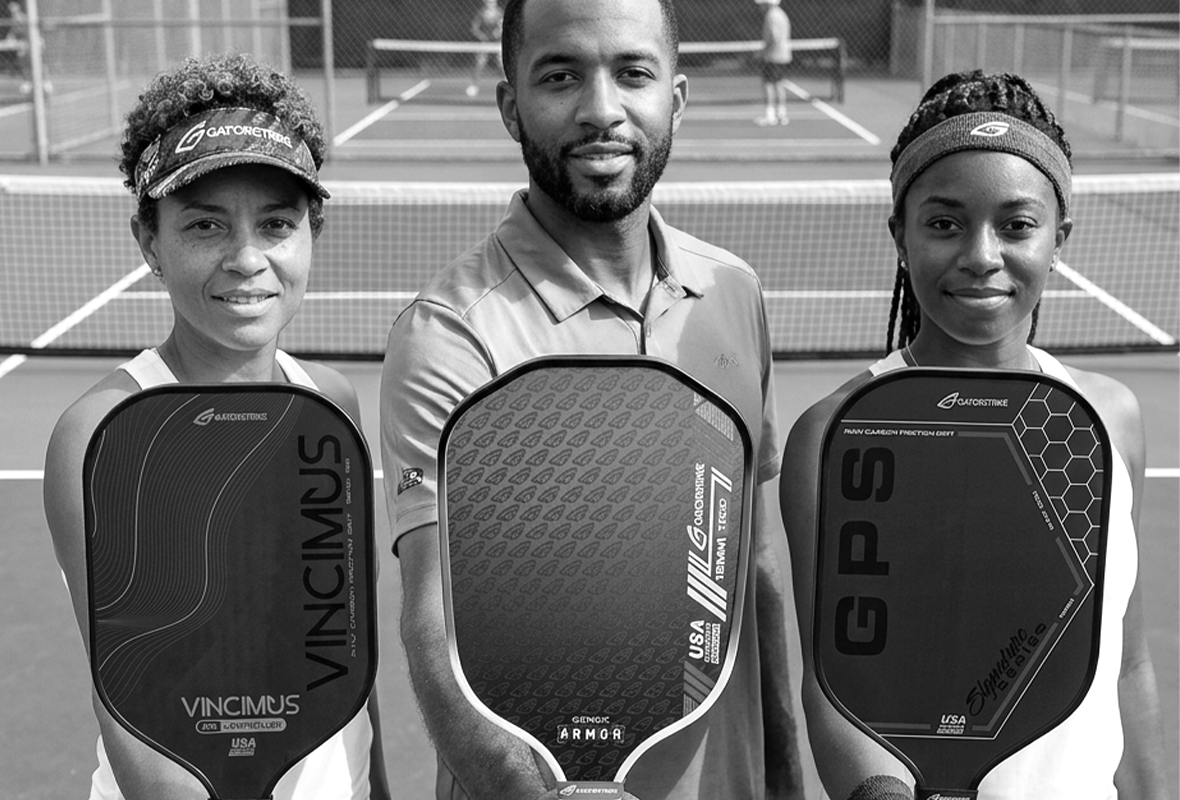
Our recommendation: the GatorStrike A.R.M.O.R Paddle
If you want to experience everything foam has to offer in a single paddle, the GatorStrike A.R.M.O.R Gen 5X All-Foam Paddle is built for exactly this moment. Its TriFextra 3-Foams-in-1 core combines EPP, EVA, and PVA foams into one unified system engineered to perform at impact, delivering the forgiving sweet spot, dampened feel, and lasting durability that make foam paddles so popular, with the power to back it up. If you're ready to make the switch, check out the A.R.M.O.R Gen 5X here.