Every pickleball player obsesses over the moment of contact. The serve. The drive. The perfectly disguised dink. We talk about spin rates, core thickness, face materials, and grip sizes. But here is the uncomfortable truth: what you do between games often matters just as much as what you do during them.
Your paddle is a performance tool. Like any precision instrument, it needs proper care. The walk from the court to your bag may only take a few seconds, yet that short window is where unnecessary wear, hidden damage, and long term performance loss quietly begin.
Let’s talk about how to protect your paddle between games and why those small habits can make a measurable difference.
Why Paddle Care Matters More Than You Think
Modern pickleball paddles are engineered with advanced materials. Carbon fiber faces, composite layups, polymer honeycomb cores, thermoformed edges. These are not simple wooden bats. They are high performance surfaces designed to grip the ball, generate spin, and deliver consistent energy transfer.
Over time, three things degrade paddle performance:
Surface contamination
Micro abrasions
Structural stress from poor storage
Dust, court grit, and ball residue build up on the face. Tiny particles act like sandpaper, slowly dulling textured surfaces. If your paddle relies on raw carbon fiber or a grit-enhanced finish for spin, this matters.
Micro impacts from careless storage can weaken edge guards or cause subtle delamination. Excess heat inside a car can soften adhesives. Repeated moisture exposure can compromise materials.
None of this happens in one dramatic moment. It happens gradually, between games.
What Actually Happens on the Court
During play, your paddle collects more than just ball contact.
Outdoor courts often have fine silica dust, acrylic particles, and debris. Each shot presses those particles into the face. Even indoor courts leave behind residue from balls and floor coatings.
When the ball compresses against the paddle, friction transfers microscopic material. That is part of what creates spin. But over time, buildup forms a thin film that reduces surface grip. Players may notice that their heavy topspin is not biting the same way it used to.
Many assume the paddle is worn out. Often, it is just dirty.
The Walk Off the Court: Small Mistakes That Add Up
Between games, most players do one of the following:
They toss the paddle onto a bench.
They lean it against a fence.
They slide it into a crowded bag without checking the surface.
Each of these habits introduces risk.
Leaning a paddle face down against concrete grinds debris into the surface. Tossing it onto hard surfaces increases the chance of edge impact. Sliding it into a bag with loose balls, keys, or accessories creates unnecessary abrasion.
It only takes a few seconds of attention to prevent this.
A Simple Between Game Protection Routine
Protecting your paddle does not require special rituals. It requires consistency.
First, inspect the face.
Before placing it in your bag, glance at the hitting surface. If you see visible dust or ball marks, address them immediately.
Second, wipe it down.
A quick surface clean removes grit that would otherwise continue grinding into the texture.
Third, store it intentionally.
Use a paddle sleeve or dedicated compartment. Avoid stacking heavy items on top. Keep it away from sharp objects.
Fourth, manage temperature.
Do not leave your paddle baking in a hot car. Extreme heat can weaken bonding materials and reduce long term durability.
This routine takes less than a minute, yet it significantly extends performance life.
Spin, Control, and the Clean Surface Connection
Spin production is largely dependent on friction between the ball and paddle face. Textured carbon fiber and composite surfaces are designed to maximize that friction within regulation limits.
When dirt accumulates, it fills the microscopic valleys in the surface. Think of it like clogging the tread on a tire. The paddle may still look fine, but its grip efficiency drops.
Players often compensate by swinging harder. That changes mechanics. Timing shifts. Control suffers. Arm strain can increase.
A clean paddle face restores the intended interaction between ball and surface. You regain predictable spin and control without changing your swing.
Protecting Your Investment
Quality paddles are not inexpensive. Competitive players rotate through multiple paddles each season, but that does not mean they neglect care. In fact, serious players are often the most disciplined about equipment maintenance.
Extending paddle life by even a few months adds up. More importantly, consistent surface performance means consistent shot outcomes.
Confidence comes from predictability. Predictability comes from maintaining your tools.
Why Cleaning Is Not Optional
Some players wait until the paddle looks visibly dirty. By then, residue has already embedded into the surface.
Regular light cleaning is more effective than occasional aggressive scrubbing. Harsh cleaning methods can damage textured finishes. Using improper materials may scratch the face or strip coatings.
That is why having the right cleaning solution matters just as much as cleaning itself.
A Smart Addition to Your Gear Bag
If you are serious about protecting your paddle between games, adding a dedicated cleaning solution to your bag is one of the simplest upgrades you can make.
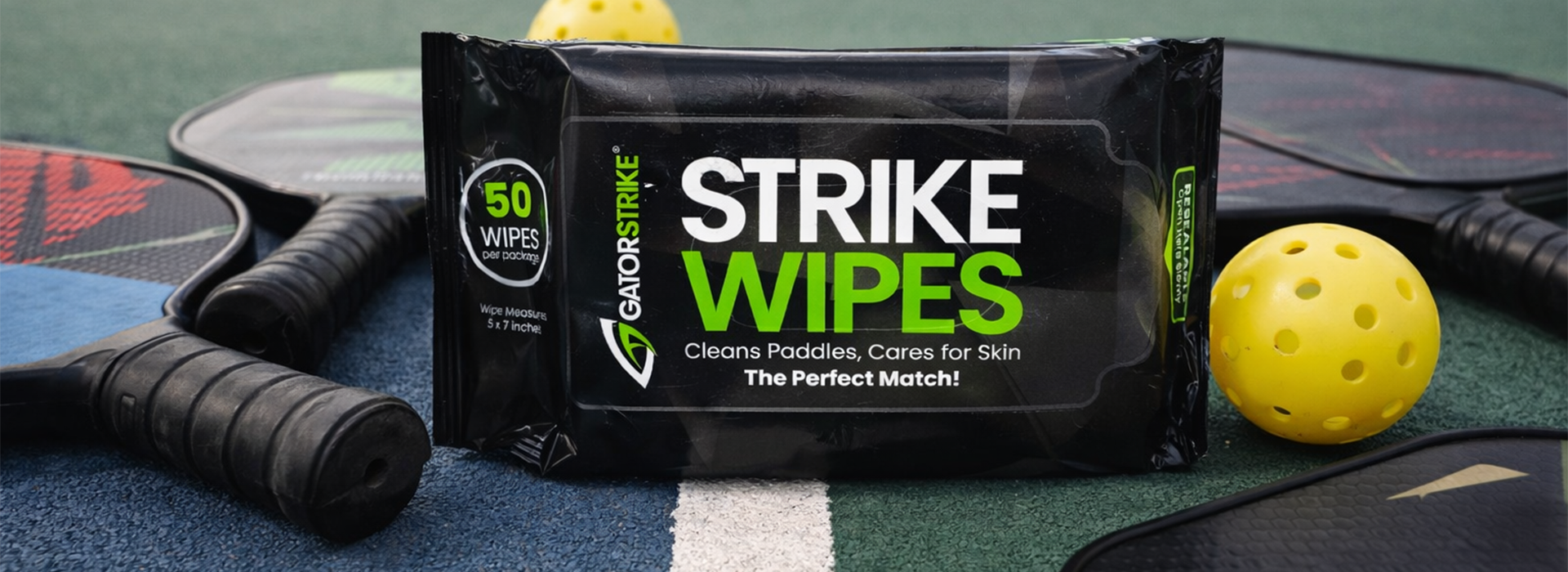
Gatorstrike Strike Wipes from gatorstrike.com are specifically designed for pickleball paddle care. They remove dirt, ball residue, and surface buildup without damaging textured carbon fiber or composite faces. The formula is gentle enough for regular use, yet effective enough to restore surface grip quickly between matches.
Instead of rubbing your paddle on your shirt or using random cloths that just smear debris around, a proper wipe lifts contaminants cleanly off the surface. That means better spin retention, more consistent control, and less long term wear.
When you combine intentional storage with regular cleaning, you are not just protecting equipment. You are protecting performance.
From the final point of one game to the first serve of the next, your paddle deserves attention. Treat it like the precision tool it is, and it will reward you with the consistency, spin, and confidence that separate casual play from competitive excellence.