The Spin Wars Just Got a Referee
Pickleball just hit a turning point, and if you haven't heard about it yet, you will soon. USA Pickleball is rolling out a new Spin Rate Test built on PaddleVision, a high-speed camera system that measures the actual rotations per minute (RPM) a paddle puts on the ball at the moment of contact. Starting October 2026, any paddle that spins the ball past 2,100 RPM will be non-compliant for sanctioned play.
Here's the number that should get every player's attention: independent testing under the new methodology found that 40 of the 42 previously approved paddles on the market blew past that limit. That's not a fringe issue. That's almost the entire field.
What This Actually Changes
For years, the paddle arms race was fought on the surface — new textures, new weaves, new coatings, all chasing one thing: more bite on the ball. USA Pickleball's old testing standard measured the paddle itself. The new one measures the outcome. It asks a tougher question: not "was this paddle built within the rules," but "does this paddle create more advantage than the sport is willing to allow."
That shift matters for every player standing in a pro shop or scrolling for their next paddle. A paddle that was legal in June could be a liability in October. If you're buying gear based on hype specs instead of how it actually holds up to scrutiny, you're gambling with your wallet.
Built to Dominate, Not Built to Dodge a Rule Book
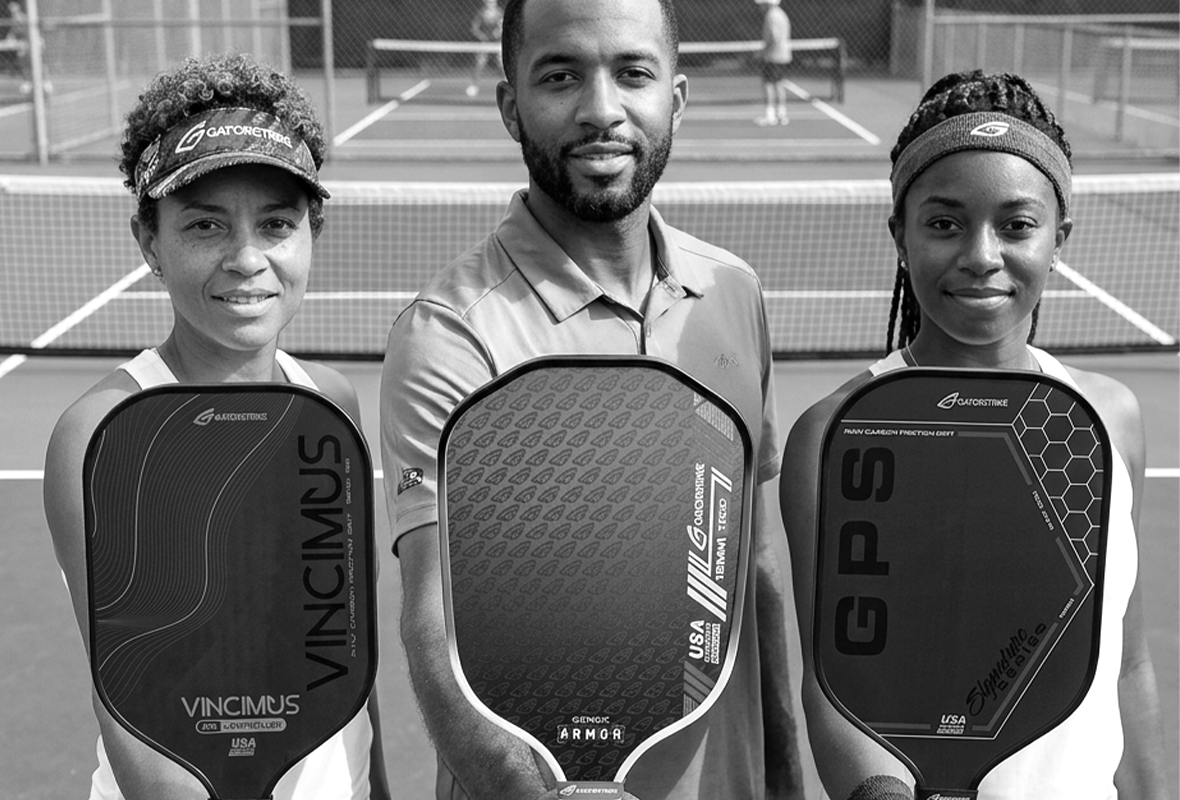
We've said it since day one: GatorStrike isn't chasing gimmicks. Our raw carbon face isn't a coating or a printed texture designed to max out a number on a spec sheet — it's a genuine, unsanded carbon fiber weave that grips the ball because of how it's built, not because it's flirting with a legal limit. Pair that with our TriFextra all-foam 15mm core — EPP, EVA, and PVA foams working as one unified system — and you get spin, power, and control that come from real engineering, not a loophole.
That's exactly why paddles like the A.R.M.O.R Blackout were designed around control and consistency, not just chasing the highest possible spin number. When the rulebook tightens, players who bought paddles built on sound fundamentals don't have to sweat it. Players who bought the flashiest spin claim on the shelf might be shopping again by fall.
What This Means for Your Next Paddle
If you're due for an upgrade, this is the moment to think past the marketing and ask the real question: is this paddle going to hold up, on the court and under the rules, a year from now? A few things worth prioritizing as the sport tightens its standards:
Look for paddles that are already USA Pickleball approved under current standards, not just riding a viral spin claim. Favor construction you can trust — raw carbon faces and foam cores that create feel and control through real material science, not surface gimmicks. And buy from a brand that stands behind the paddle long after the sale, because when the rules shift, you want a company that's already built for where the sport is headed, not scrambling to catch up.
The spin arms race isn't over. It's just getting a referee. And the players who show up in October with paddles built on real technology, not manufactured hype, are the ones who won't miss a beat.
Ready to Play Ahead of the Rule Change?
The A.R.M.O.R Blackout was built for players who want spin and control that comes from real carbon technology, not a number that might not survive the season. Raw carbon face. TriFextra all-foam core. USA Pickleball approved. Backed by our 30-day defect coverage and 1-year warranty.