Ask any coach where pickleball points are really won and you'll hear the same answer: the soft game. Dinks, drops, resets, and patient kitchen-line exchanges decide most rallies at every level above pure beginner. That game is built on touch and control, and it turns out foam core paddles have a natural advantage here. Let's look at why foam helps the soft game, and how spin fits into the picture.
Control starts with predictability
Control isn't about hitting softer, it's about the ball doing exactly what you intend, every time. That requires a predictable response from your paddle. Foam's even internal structure gives a more uniform, repeatable feel across the face, so a dink struck slightly high behaves much like one struck dead center. When the paddle responds consistently, you can dial in touch shots with confidence instead of guessing.
The dampened feel of foam reinforces this. A muted, planted contact gives you a clear sense of where the ball is on the face and how it's leaving, which is exactly the feedback you want when you're trying to drop a ball into the kitchen or reset a hard drive.
Why foam excels at resets and dinks
A reset, absorbing a fast incoming ball and dropping it softly into the non-volley zone, is one of the hardest skills in pickleball, and it's all about absorbing energy. Foam's dampening helps here: instead of the ball springing off a lively face, it settles, making soft, controlled resets easier to execute under pressure. The same goes for dinks: a predictable, forgiving face keeps your soft shots low and accurate even when you're reaching or off balance.
Where spin comes in
Spin is the soft game's secret weapon. Topspin dinks dive down into the kitchen and are harder to attack; slice resets stay low and skid. Spin also lets you hit your drives harder while keeping them in, because the topspin pulls the ball down. While the paddle face texture is the primary driver of spin, foam plays a supporting role: by giving you a stable, predictable platform and slightly longer, more controlled contact feel, foam helps you apply spin reliably rather than fighting an unpredictable rebound.
The combination is powerful, a grippy face for spin plus a controlled foam core for touch gives you both shape and precision on your soft shots. That's a big reason control-oriented players have embraced foam.
Control doesn't mean giving up power
One of the best things about modern foam is that you no longer have to choose. Because foam is so tunable, a well-designed paddle can offer soft-game control and the ability to drive when the opening appears. Multi-foam cores in particular aim to deliver touch at the kitchen and power on the bang, so you're not switching paddles for different parts of your game.
Drills to sharpen your soft game
Great equipment rewards practice. Try dedicated dinking exchanges focusing on keeping the ball low and unattackable, reset drills where a partner drives at you and you absorb into the kitchen, and target practice dropping third shots into the non-volley zone. A predictable foam paddle makes the feedback from these drills cleaner, so you improve faster.
Frequently asked questions
Does foam help with spin directly?
The face texture creates most of the spin, but foam's stable, predictable contact helps you apply that spin consistently.
Is foam better for control than power players?
Foam serves both, but control players especially appreciate its predictable, dampened feel for the soft game.
Can one foam paddle do both touch and power?
Yes. Multi-foam designs are built to balance soft-game control with the ability to drive when needed.
Our recommendation: the GatorStrike A.R.M.O.R Paddle
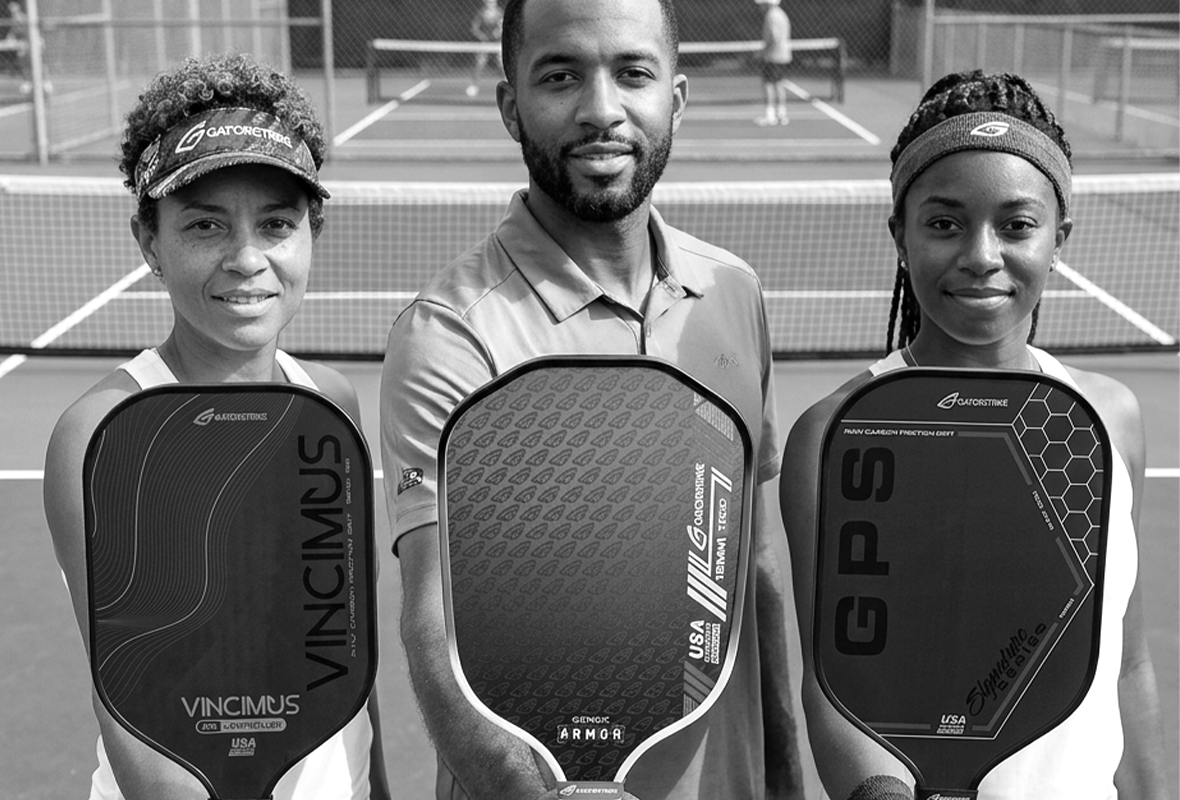
If you want a paddle that rewards a sharp soft game, the GatorStrike A.R.M.O.R Gen 5X All-Foam Paddle is built for touch and control. Its TriFextra 3-Foams-in-1 core, blending EPP, EVA, and PVA foams, delivers the predictable, dampened contact that makes dinks, drops, and resets repeatable, while supporting reliable spin and the power to finish when the ball sits up. Discover the A.R.M.O.R Gen 5X here.