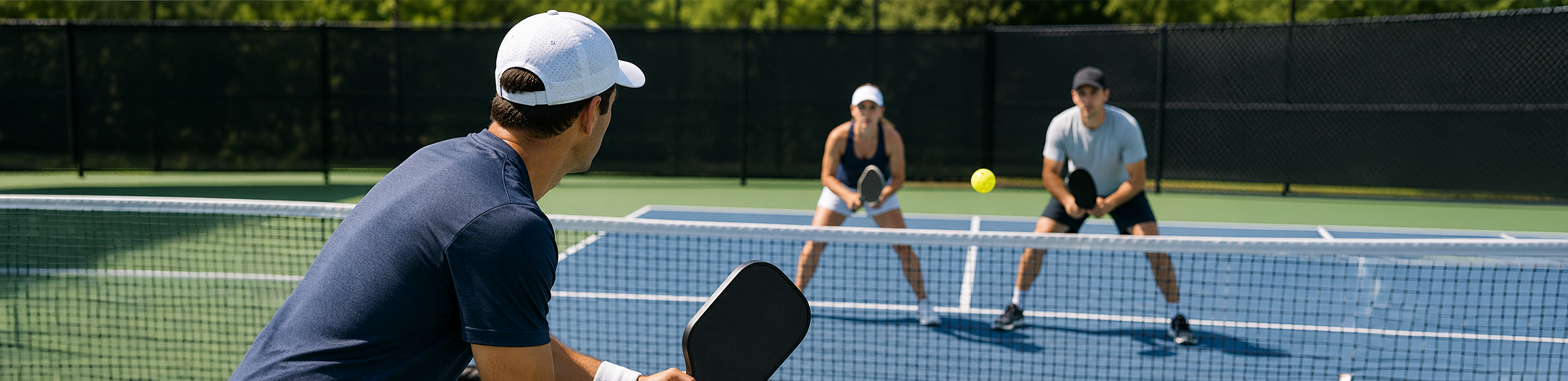
In pickleball, most players focus on what happens during the rally. They work on drives, dinks, resets, and fast hands exchanges, believing the point truly begins the moment the ball is struck.
Experienced players know better.
Long before the serve crosses the net, valuable information is already being revealed. Opponents constantly give away clues through positioning, body language, paddle preparation, habits, and decision-making patterns. Players who learn to recognize these signals gain a quiet but powerful advantage before the rally even unfolds.
The ability to read opponents early is one of the skills that separates reactive players from strategic competitors. It allows you to anticipate shots, prepare mentally, and make smarter tactical decisions with greater confidence.
In many ways, pickleball becomes easier when you stop simply reacting and start predicting.
Why Pre Point Observation Matters
Pickleball happens fast, especially at intermediate and advanced levels. Reaction time alone is rarely enough to consistently stay ahead of skilled opponents.
Reading players before the point starts helps you:
- Anticipate likely shots
- Improve court positioning
- Reduce hesitation
- Recognize weaknesses
- Identify emotional patterns
- Apply pressure strategically
The more information you gather early, the calmer and more prepared you become during rallies.
Great anticipation often looks like athletic instinct, but much of it comes from observation and pattern recognition.
Start by Watching Warmups
Some of the best information appears before the official game even begins.
Warmups reveal how comfortable players are with different shots and movement patterns.
Pay attention to:
- Forehand confidence
- Backhand consistency
- Footwork speed
- Paddle control at the kitchen
- Overhead mechanics
- Transition movement
Many players unintentionally expose weaknesses during relaxed hitting sessions.
For example:
- A player repeatedly avoiding backhands may lack confidence there
- A player struggling with soft dinks may prefer fast-paced exchanges
- Stiff movement could indicate limited mobility or fatigue
- Aggressive warmup slams may signal an attack-first mentality
Warmups provide a preview of tendencies before competitive pressure even starts.
Study Court Positioning Before the Serve
Positioning often reveals strategy.
Returning Team Positioning
When returning serve, notice where players stand after the return.
A player who charges aggressively toward the kitchen likely prefers offensive control and quick net pressure.
A player who hesitates midcourt may feel less comfortable transitioning forward.
If someone consistently stays farther back, they may:
- Prefer baseline play
- Struggle with hand battles
- Lack confidence at the kitchen
- Be protecting mobility limitations
These details help shape your targeting decisions early.
Serving Team Positioning
Serving teams also reveal intentions through spacing and posture.
Watch for:
- Aggressive poaching posture from the server’s partner
- Defensive positioning near the sideline
- Paddle readiness at the kitchen line
- Communication between teammates
Some doubles teams telegraph formations or planned poaches before the point even starts.
Learning to recognize those signals allows you to counter strategically.
Observe Paddle Position
Paddle preparation says a great deal about a player’s mindset and readiness.
High Paddle Position
Players holding paddles high and out front are usually prepared for quick exchanges and fast hands battles.
These players often:
- Attack aggressively
- Counter speed-ups effectively
- Anticipate volleys early
Against them, controlled placement and patience may work better than reckless pace.
Low Paddle Position
A low paddle can indicate slower reaction readiness or less comfort during rapid exchanges.
Players with lower paddle positioning may struggle against quick attacks directed toward the body or shoulders.
While not always true, paddle posture frequently reflects anticipation level and confidence.
Watch the Eyes and Head Movement
Experienced players often track subtle visual habits.
Where opponents look before the serve or return can reveal their intentions.
Examples include:
- Glancing crosscourt before serving wide
- Looking toward the middle before a poach
- Staring at a sideline target before an aggressive return
Head position can also reveal comfort levels. Nervous or uncertain players often move less fluidly and appear visually tense before points.
Calm players tend to maintain relaxed focus and efficient movement.
Identify Emotional Tendencies Early
Mental patterns influence strategy just as much as technical ability.
Some players become frustrated quickly after errors. Others lose confidence under pressure or tighten up during important points.
Watch for reactions such as:
- Shaking heads after mistakes
- Frustrated paddle taps
- Negative self-talk
- Hesitation after missed shots
- Overaggressive responses following errors
Emotional players often become predictable.
For example:
- Players frustrated by soft play may begin forcing attacks
- Nervous players may avoid aggressive serves on big points
- Impatient players often speed up too early during dink rallies
Recognizing emotional tendencies allows you to apply pressure strategically without changing your own composure.
Pay Attention to Serve Habits
Serving patterns can reveal both confidence and strategy.
Notice:
- Preferred serve direction
- Depth consistency
- Spin tendencies
- Pace changes under pressure
Many recreational and intermediate players develop favorite serve targets and repeat them unconsciously.
Some players serve aggressively only when ahead. Others become conservative during tight scores.
Once patterns emerge, you can begin anticipating location and preparing earlier.
Return Patterns Matter Too
The return of serve often exposes a player’s comfort zones.
Watch for:
- Crosscourt preference
- Deep vs shallow returns
- Aggressive topspin attempts
- Floaty defensive returns
A player who consistently returns short may struggle with depth control. A player who avoids returning down the line may lack confidence in directional precision.
Reading these habits allows you to anticipate weaker balls and transition forward more aggressively.
Learn to Recognize Speed Preferences
Players usually reveal whether they prefer fast or slow play within the opening few points.
Fast Pace Players
These players often:
- Attack early
- Speed up from difficult positions
- Crowd the kitchen line aggressively
- Prefer hand battles
Against them, slowing the pace with resets and patient dinks can create frustration.
Slow Pace Players
These players prefer:
- Longer rallies
- Controlled placement
- Soft exchanges
- Strategic positioning
Against them, carefully timed speed changes may create discomfort.
Understanding pace preference early helps shape your overall tactical approach.
Spot Physical Limitations Without Underestimating Opponents
Smart players observe movement carefully, but never disrespectfully.
Look for:
- Difficulty changing direction
- Slower lateral movement
- Fatigue signs
- Reluctance to move backward
- Trouble handling low balls
These observations help guide shot selection, but skilled players often compensate for physical limitations with excellent anticipation and touch.
Avoid assuming that mobility alone defines overall ability.
Watch Team Dynamics in Doubles
Doubles pickleball is full of communication clues.
Notice:
- Which player takes middle balls
- Who leads communication
- Who appears hesitant
- Which player opponents protect
- Whether teammates trust each other during poaches
Sometimes the stronger player dominates positioning while the weaker player becomes increasingly passive.
Other teams rely heavily on one player’s offense or court coverage.
Recognizing these dynamics helps you identify pressure points within the partnership.
Use the First Few Points as Information Gathering
Many advanced players treat early rallies like reconnaissance missions.
Instead of trying to hit spectacular winners immediately, they gather information:
- How do opponents handle pace?
- Which side is weaker?
- How patient are they?
- Do they attack low balls recklessly?
- Can they reset under pressure?
The more information collected early, the smarter your decisions become later.
Patience during the opening stages often leads to greater control as the match develops.
The Best Readers Stay Adaptable
Reading opponents is valuable, but assumptions can become dangerous.
Players adjust. Momentum shifts. Confidence changes throughout matches.
Strong competitors continually reassess:
- Is the opponent changing strategy?
- Are they adapting to my patterns?
- Has their confidence improved?
- Are they becoming more aggressive or more cautious?
The goal is not to stereotype opponents but to stay observant and flexible.
Great anticipation combines preparation with constant adjustment.
Avoid Becoming Predictable Yourself
As you learn to read others, remember that skilled opponents are observing you too.
Protect yourself by:
- Varying serve locations
- Changing pace occasionally
- Avoiding repetitive patterns
- Maintaining calm body language
- Using similar preparation for different shots
Unpredictability creates hesitation, and hesitation creates opportunity.
Final Thoughts
Pickleball is often described as a game of reflexes, but at higher levels it becomes just as much a game of awareness and anticipation.
The point rarely begins with the serve alone. It begins with observation. Every stance, paddle position, movement pattern, and emotional reaction provides clues about what may happen next.
Players who learn to read opponents before the rally starts gain a strategic advantage that cannot be measured by power or athleticism alone. They move earlier, react calmer, and make smarter decisions because they are prepared before the ball is even struck.
In a sport built on fast exchanges and subtle margins, the ability to recognize patterns early may be one of the most valuable skills a player can develop.