The pickleball aisle at your local sporting goods store has gotten complicated. Paddles range from $20 to $250. Balls come in multiple colors and two versions. There are bags, gloves, dampeners, and accessories you may not recognize. For a beginner, the choices feel overwhelming.
Here is what actually matters: you need three things to start. Everything else is optional, and most of it can wait until you know whether you love the sport.
The Paddle: Your Most Important Decision
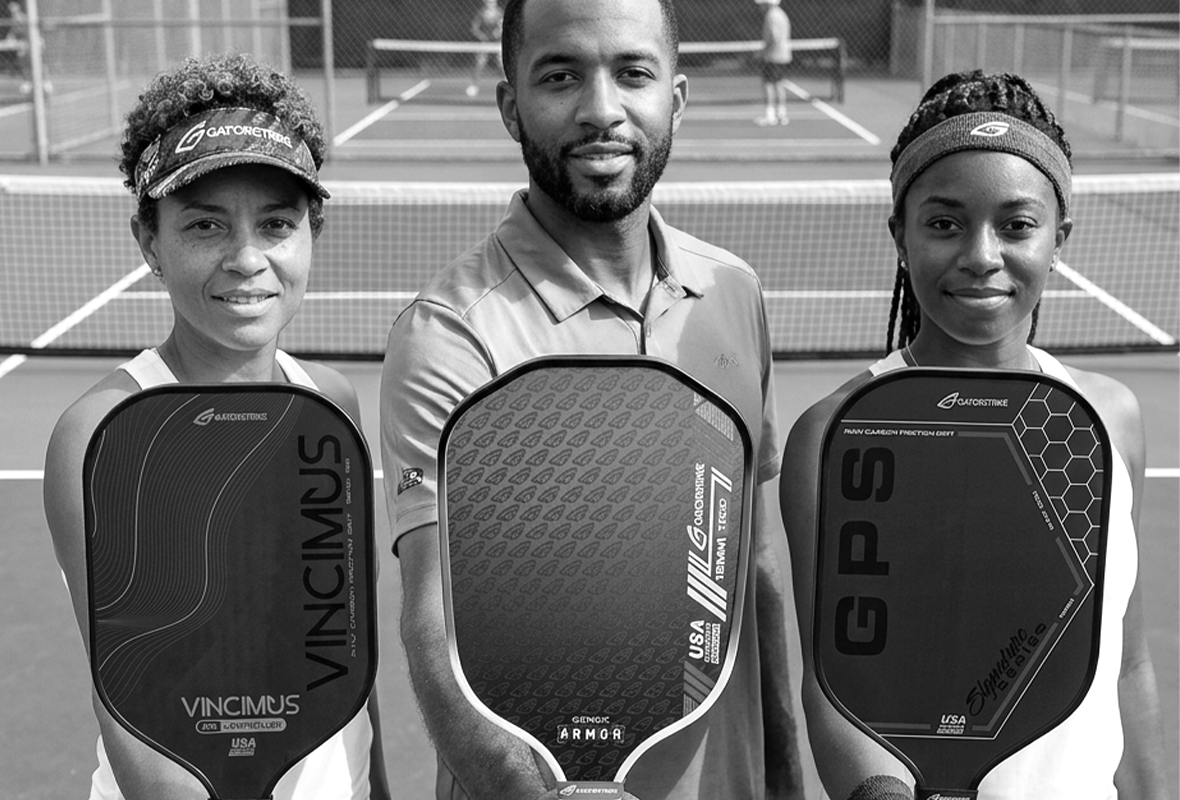
Your paddle shapes every single shot you hit, so it is worth spending a few minutes picking the right one. For beginners, control matters far more than power. A lighter paddle in the 7.5 to 8 ounce range is easier to maneuver, easier on your arm, and gives you more touch on soft shots near the net.
Material matters too. Composite paddles, typically a fiberglass or carbon fiber face over a polymer honeycomb core, are the best starting point for most beginners. They offer a solid balance of control and durability without excessive cost. Graphite paddles are lighter and more responsive but tend to cost more. Wood paddles are cheap but heavy, and most players outgrow them quickly.
A solid beginner paddle in the $50 to $100 range from brands like Selkirk, Onix, or Paddletek will serve you well for months of regular play. Do not buy an expensive paddle until you have developed consistent fundamentals.
The Ball: Indoor vs. Outdoor
Pickleballs come in two versions, and the difference is real. Outdoor balls are harder, heavier, and have smaller holes, which helps them hold a straight line in wind and off hard court surfaces. Indoor balls are softer, lighter, and have larger holes, which makes them travel more slowly and predictably on smooth gym floors.
If you are playing outdoors on a hard court, use an outdoor ball. If you are playing at a gym or community center, use an indoor ball. When buying your own, a six-pack of outdoor balls such as the Dura Fast 40 or Franklin X-40 is a practical starting point.
Footwear: Do Not Overlook This One
Regular running shoes are tempting because you probably already own them. But running shoes are designed for forward motion. Pickleball involves constant lateral shuffling, quick directional changes, and sudden stops. Court shoes, designed for tennis or volleyball, provide the lateral support and grip those movements require.
Playing in running shoes is not dangerous, but it will limit your footwork and increase your risk of rolling an ankle on a hard stop. A pair of court shoes in the $60 to $100 range is a reasonable investment once you have decided pickleball belongs in your regular routine.
Clothing and the Accessories Worth Considering
Breathable, moisture-wicking athletic wear is all you need on the clothing front. Anything you would wear to play tennis or go to the gym works fine. A dedicated pickleball bag becomes useful once you are playing consistently, mostly because paddles are awkward to carry loosely. A basic bag with a padded paddle sleeve and a ball pocket runs about $25. Protective eyewear is worth considering as your play speed increases.
What to Skip for Now
Vibration dampeners, specialized grip sleeves, paddle edge guards, and ball machines are all real products with genuine benefits for experienced players. As a beginner, they add cost without improving your learning curve. Resist the urge to gear up before you know what you need.
Focus on playing consistently, developing clean technique, and noticing what is actually limiting your game. The right upgrades become obvious over time. The players who improve fastest are not the ones with the best gear. They are the ones who showed up twice a week and paid attention.