Pickleball players often obsess over paddle materials, core construction, and surface textures in search of better spin. Yet one of the most overlooked factors affecting spin has nothing to do with manufacturing. It is what builds up on the paddle during play.
Sweat, dirt, and ball residue quietly accumulate on the paddle face, gradually changing how the paddle interacts with the ball. While the effect is subtle at first, it can significantly reduce spin potential over time. Understanding this hidden factor can help players maintain consistent performance and gain an edge on the court.
Why Spin Depends on Surface Interaction
Spin in pickleball is created through friction. When the paddle face grips the ball during contact, it imparts rotation. Modern paddles are designed with textured surfaces to maximize this friction, allowing players to generate topspin, backspin, and sidespin more effectively.
However, this delicate interaction depends on a clean and responsive surface. Even a thin layer of contaminants can interfere with how the paddle grips the ball. Instead of clean contact, the ball may slide slightly, reducing the amount of spin generated.
How Sweat Affects Paddle Performance
Sweat is a constant companion during intense rallies, especially in warm conditions. While most players focus on keeping their grip dry, sweat also finds its way onto the paddle face.
When sweat dries, it leaves behind salts and oils. These residues create a thin film that smooths out the paddle’s texture. Over time, this reduces the paddle’s ability to “grab” the ball.
The result is subtle but noticeable. Spin shots lose bite. Topspin drives dip less aggressively. Slices float more than expected. Players may compensate by swinging harder, often leading to inconsistency.
The Role of Dirt and Court Debris
Outdoor courts introduce another layer of complexity. Dust, sand, and tiny debris particles can stick to the paddle surface during play. Each contact with the ball can press these particles into the paddle face, further reducing effective texture.
Dirt does more than just sit on the surface. It can fill in the microscopic grooves and roughness that are essential for spin generation. In some cases, it can even create uneven contact points, leading to unpredictable ball behavior.
Players may notice this as a lack of control during spin-heavy shots, especially when trying to place the ball with precision.
Ball Residue and Microplastic Build Up
Every time the paddle strikes the ball, a small amount of material transfers from the ball to the paddle. Over time, this creates a thin layer of residue that is not always visible but still impacts performance.
This build up can dull the paddle’s surface, reducing its ability to grip the ball effectively. Combined with sweat and dirt, it creates a compound effect that steadily degrades spin potential.
For players who rely heavily on spin to control rallies, this can be the difference between forcing an error and giving an opponent an easy return.
Signs Your Paddle Needs Cleaning
Many players continue playing without realizing their paddle performance has declined. There are a few clear signs that indicate it is time to clean your paddle.
Spin shots feel less sharp or less reliable
The ball seems to slide off the paddle face
Control on soft shots becomes inconsistent
The paddle surface looks slightly cloudy or feels smoother than usual
Recognizing these signs early can help maintain peak performance throughout your games.
The Performance Advantage of a Clean Paddle
A clean paddle restores the surface to its intended condition. This means better friction, more reliable spin, and improved control.
Players often report immediate improvements after cleaning their paddle. Spin returns to expected levels, and shot placement becomes more predictable. Instead of adjusting technique to compensate for reduced grip, players can focus on executing their natural game.
Consistency is one of the most valuable assets in pickleball, and maintaining a clean paddle is a simple yet powerful way to achieve it.
Building a Simple Paddle Maintenance Habit
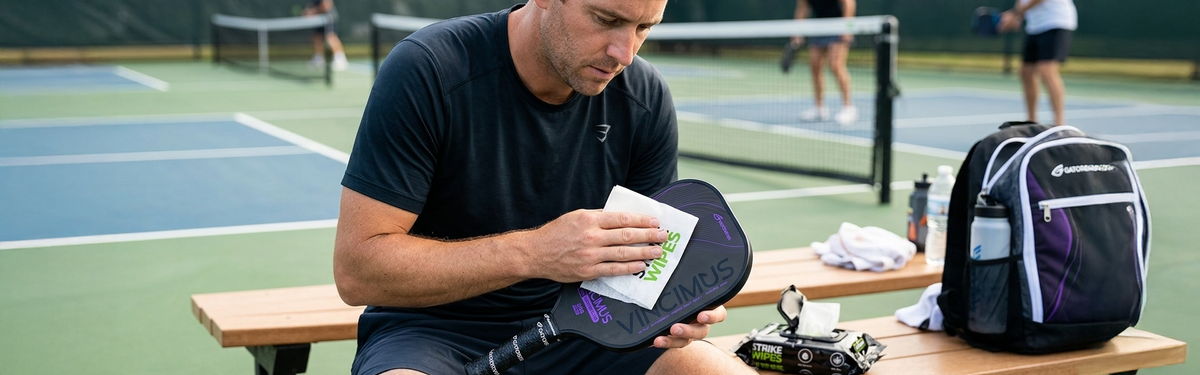
Keeping your paddle clean does not require complicated routines. The key is consistency. Wiping down your paddle before or after games can prevent build up from becoming a problem.
Regular maintenance ensures that sweat, dirt, and residue never have the chance to accumulate to performance-altering levels. It also helps extend the life of the paddle by preserving its surface integrity.
Players who adopt this habit often notice that their paddle performs more consistently across different sessions and conditions.
Why Gatorstrike Strike Wipes Are a Smart Choice
For players looking for an easy and effective solution, Gatorstrike Strike Wipes offer a practical way to maintain paddle performance. These wipes are designed specifically for pickleball paddles, making it simple to remove sweat, dirt, and residue without damaging the surface.
Using them regularly helps preserve the texture that is essential for generating spin. Instead of dealing with gradual performance loss, players can keep their paddle in optimal condition with minimal effort.
If spin is a key part of your game, maintaining a clean paddle is not optional. It is essential. Gatorstrike Strike Wipes provide a convenient and reliable way to protect your paddle’s performance, ensuring that every shot has the grip and control you expect.