Scroll through any "best pickleball paddles of 2026" roundup and one material shows up again and again: carbon fiber. Reviewers this year keep landing on the same conclusion — a textured carbon face increases dwell time, sharpens spin, and holds up better over hundreds of hits than fiberglass or painted composite faces ever could. That's not a marketing trend. It's a mechanical one, and it's why the face material matters just as much as the core underneath it.
What Carbon Fiber Actually Does at Contact
A paddle face's job is to grab the ball for a split second longer than a smooth surface would, then release it with spin and directional control. Carbon fiber weaves — things like T700 and T800 — create a slightly textured, grippy surface at a microscopic level. That texture is what lets a good player brush up the back of the ball for topspin on a drive, or slice underneath it for a low, skidding dink. Smoother, cheaper faces just don't grab the ball the same way, which is why so many players upgrading from a starter paddle notice an almost immediate jump in shot-shaping ability.
Raw Carbon vs. Painted Carbon: The Difference That Actually Matters
Here's what a lot of buying guides gloss over: not all carbon faces are created equal, even when the spec sheet says "carbon fiber." Plenty of paddles run a carbon layer underneath a painted graphic or a clear coat for looks, and that coating sits between the weave and the ball — dulling the exact grip and feedback carbon is supposed to deliver. A raw carbon face skips that step entirely. The weave is left exposed, so what you feel at contact is the actual material, not a layer over it.
Why This Matters More As You Improve
Beginners can get away with almost any face material because they're not yet manipulating spin and pace with precision. But the moment a player starts developing a real soft game — dinking with purpose, snapping topspin on a third shot, disguising a drop from a drive — face material stops being a footnote and becomes the difference between a shot that works and one that floats long. This is also exactly where the current wave of premium paddles from the big-name brands is charging $250–$330: raw or high-grade carbon faces paired with premium cores.
GatorStrike Builds Every Face Raw
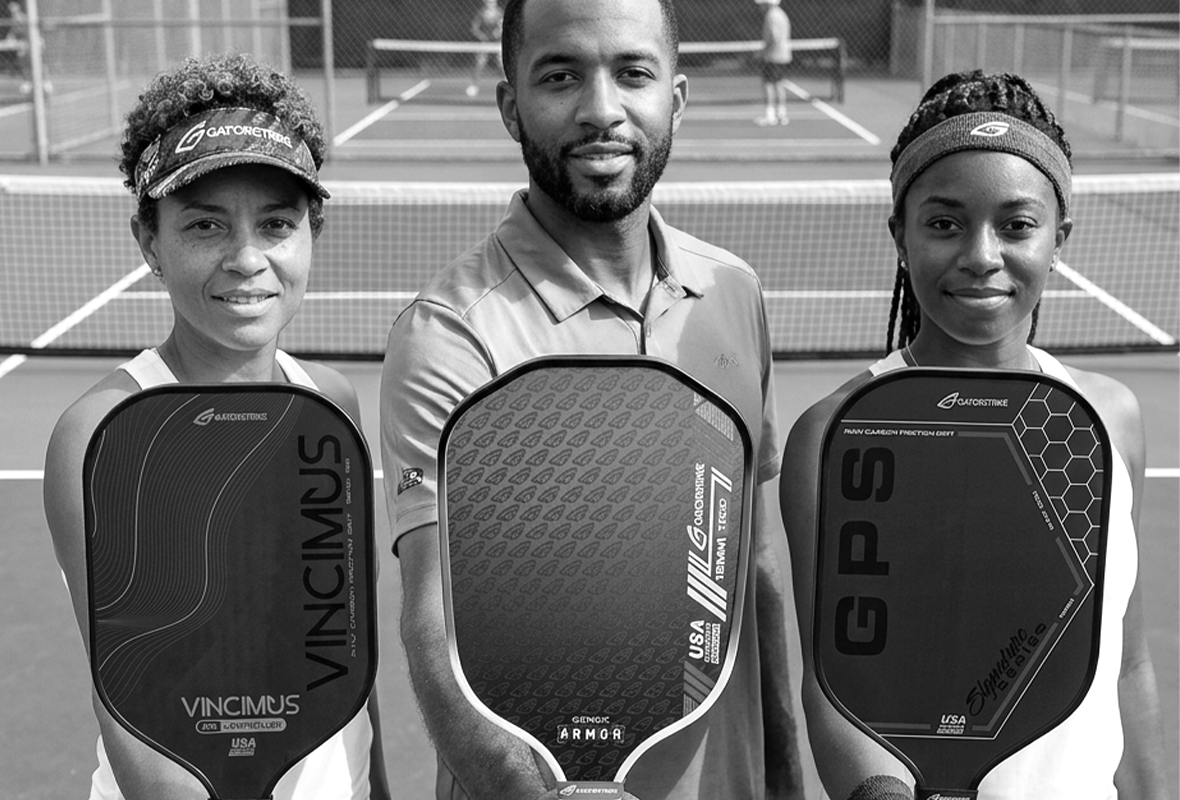
Every GatorStrike paddle — from the A.R.M.O.R Gen 5X to the Blackout — uses a raw carbon face by design, not as an upsell option. The A.R.M.O.R Blackout in particular is built for players chasing spin: raw carbon up top paired with the TriFextra all-foam core underneath for a big sweet spot and dampened, controlled feel off the face. You get the same face-material advantage the $300 paddles are charging for, without the markup.
Feel the difference raw carbon makes for yourself. Check out the A.R.M.O.R Blackout and start generating more spin on every shot.