Pickleball Blog | Training Tips, Paddle Reviews & Strategies

How a 10 mm Polypropylene Core Changes Speed and Control
Paddle thickness is one of the most misunderstood variables in pickleball. Players talk about power and control as if they exist on opposite ends of a sliding scale, but the truth is more nuanced. Core thickness, especially in polypropylene honeycomb designs, directly influences how quickly the ball leaves the face and how precisely you can place it. Among modern options, a 10 mm polypropylene core stands out for one defining characteristic: speed. It is thinner, firmer, and more responsive than its thicker counterparts. But how exactly does that translate on the court? Let’s break down what happens inside the paddle and why 10 mm construction creates such a distinct playing experience. Understanding the Polypropylene Honeycomb Core Most high performance paddles today use a polypropylene honeycomb core. This structure consists of small hexagonal cells made from lightweight plastic. When the ball strikes the paddle, these cells compress and rebound, contributing to energy return and feel. Polypropylene is popular because it offers a strong balance of durability, responsiveness, and vibration dampening. It provides a stable platform without excessive harshness, making it suitable for a wide range of playing styles. Thickness is where things get interesting. What Happens When the Core Is 10 mm Thick A 10 mm core is considered thin by competitive standards. Many control oriented paddles measure 14 mm or 16 mm. Reducing the thickness changes three major performance characteristics: Compression depthEnergy transfer speedDwell time With less material to compress, the ball does not sink as deeply into the paddle. That means the contact time between ball and face is shorter. In physics terms, the system returns energy more quickly. On court, that feels like pop. Speed Through Faster Energy Return The thinner the core, the less time it takes for the paddle to rebound after impact. The ball springs off the face with noticeable quickness. This makes a 10 mm polypropylene core ideal for players who thrive on: Quick counters at the kitchenFast hand exchangesAggressive speed upsPunch volleys Because the ball leaves the paddle so rapidly, opponents have less reaction time. Drives feel sharper. Blocks redirect pace efficiently. Flicks and wrist based shots explode forward. This is not just about raw power. It is about how quickly that power is delivered. The Control Question The immediate assumption is that thinner paddles sacrifice control. In reality, control shifts rather than disappears. With reduced dwell time, you cannot rely on the ball sitting on the face as long as it might on a thicker core. That means softer touch shots require refined mechanics. However, directional control remains strong due to the inherent stability of polypropylene honeycomb construction. In fact, many advanced players prefer the crisp feedback of a 10 mm core. The direct connection between paddle and ball provides clear information about contact quality. There is little lag or softness masking the feel. For players with consistent technique, that responsiveness enhances precision rather than reducing it. Stability and Sweet Spot Dynamics Although thicker paddles often advertise larger sweet spots, a well designed 10 mm polypropylene core can still deliver impressive stability. The honeycomb structure distributes force across the face, helping maintain paddle integrity even during off center hits. What changes is the feel. Instead of a plush cushion, you get a firm, connected response. The paddle behaves more like an extension of your hand, especially during fast exchanges at the net. In competitive play where milliseconds matter, that immediate response can be a decisive advantage. Spin Potential With a Thin Core Spin is influenced primarily by surface texture and friction, but core thickness plays a supporting role. With a 10 mm core, the shorter dwell time means spin generation depends heavily on clean, confident contact. Pair this construction with a high quality textured face and you get sharp, biting rotation without excessive trampoline effect. For aggressive players who accelerate through the ball, the result is penetrating topspin and decisive slice shots that stay low and fast. Who Should Consider a 10 mm Polypropylene Paddle? This setup is particularly well suited for: Players who prioritize speed over soft touchAggressive baseliners who drive through the courtNet attackers who dominate hand battlesAthletes transitioning from tennis who prefer firmer response If your style is proactive and offensive, a thinner core rewards assertiveness. On the other hand, players who rely heavily on slow, extended dink rallies may prefer the added dwell time of thicker cores. It ultimately comes down to how you want the paddle to respond when the ball makes contact. A Paddle That Showcases 10 mm Performance If you are intrigued by the advantages of a thin polypropylene build, the Gatorstrike Gold Pro Series Paddle from gatorstrike.com is a standout example. Built with a 10 mm polypropylene core, it delivers the fast rebound and crisp responsiveness that aggressive players crave. The ball comes off the face with speed, making drives and counters feel sharp and controlled. At the same time, the honeycomb construction maintains structural stability, so you are not sacrificing reliability for pop. The combination of thin core construction and high performance face materials creates a paddle that feels explosive yet precise. For players who want quicker hands at the net, more penetrating groundstrokes, and confident directional feedback, this design checks every box. A 10 mm polypropylene core is not just thinner. It is faster, firmer, and more direct. When paired with thoughtful engineering, it becomes a tool for players ready to take control of tempo rather than react to it.
Learn more
What Makes an All Foam Core Paddle So Powerful and Stable?
Pickleball paddle technology has evolved rapidly over the past few years. From wood to polymer honeycomb to thermoformed carbon fiber builds, manufacturers continue to experiment in pursuit of one goal: better performance. One of the most talked about developments in recent seasons is the rise of the all foam core paddle. Players who switch to this construction often describe the same sensation. The paddle feels solid. The ball jumps. Mishits do not twist as much. Drives carry deeper with less effort. So what is actually happening inside an all foam core paddle that creates this combination of power and stability? Let’s break it down. Understanding Traditional Paddle Cores To appreciate foam core performance, it helps to understand what most paddles use. The majority of modern paddles feature a polymer honeycomb core. This design uses a grid of hollow cells that compress and rebound when the ball strikes the surface. Honeycomb cores are lightweight and responsive, which makes them popular across skill levels. However, hollow cells introduce small pockets of air. When impact occurs, energy disperses unevenly across those cells. On clean center hits, this works beautifully. On off center shots, twisting can occur, and energy transfer may feel inconsistent. That is where foam construction changes the equation. What Is an All Foam Core Paddle? An all foam core paddle replaces the hollow honeycomb structure with high density foam that runs throughout the interior of the paddle. Instead of air filled cells, the core is filled with material that absorbs and redistributes force more uniformly. The result is a paddle that feels more solid from edge to edge. The foam works in tandem with outer carbon fiber or composite layers, creating a unified structure that compresses differently than traditional builds. Rather than collapsing into individual cells, impact energy spreads across a continuous internal medium. This subtle difference dramatically affects both power and stability. Why All Foam Cores Generate So Much Power Power in pickleball comes from efficient energy return. When the ball hits the paddle, the face and core compress slightly. That stored energy then rebounds back into the ball. Foam cores excel here for several reasons. First, energy distribution is more uniform. Because there are no hollow cells, the core compresses as a single body. Less energy is lost to irregular deformation. More of it returns to the ball. Second, foam density can be tuned for explosive rebound. High performance foam blends are engineered to provide a lively response without feeling overly stiff. Players often notice that drives require less exaggerated swing effort to achieve depth. Third, the added internal mass increases plow through. When the paddle meets the ball, it maintains momentum through contact. This leads to heavier shots that push opponents back, especially on baseline drives and aggressive counters. In short, the ball leaves the face with authority. Stability and the Enlarged Sweet Spot Power is exciting, but stability is what keeps shots on target. All foam cores shine in reducing paddle twist. When you strike the ball slightly off center, torque forces attempt to rotate the paddle in your hand. Traditional hollow cores may flex unevenly under this stress. Foam filled interiors resist that twisting motion. The solid internal structure supports the entire face, not just the center. This increases torsional stability and makes mishits more forgiving. Players feel this as an expanded sweet spot. Shots struck near the edges still travel with decent pace and direction. The paddle feels planted rather than wobbly. For competitive players engaged in fast hand battles at the kitchen, this stability can be a major advantage. Quick exchanges demand confidence that the paddle will not flutter under pressure. Vibration Dampening and Arm Comfort Another hidden benefit of foam cores is vibration control. When a paddle vibrates excessively on impact, that feedback travels into the wrist, elbow, and shoulder. Over time, repetitive shock can contribute to discomfort. Foam naturally absorbs high frequency vibration more effectively than hollow polymer structures. Instead of sharp feedback, players often describe a more muted, controlled feel. This does not mean the paddle feels dead. Rather, it feels connected yet stable. The feedback is clean without being harsh. For players who practice frequently or compete in multiple matches per day, this added comfort can make a real difference. Control Is Still Part of the Equation There is a misconception that powerful paddles automatically sacrifice control. With all foam cores, that tradeoff is not as extreme as some expect. Because the paddle remains stable through contact, shot placement can actually improve. When the face angle does not shift during impact, the ball launches more predictably. Combined with modern textured carbon fiber faces, foam core paddles can generate strong spin while maintaining directional accuracy. The key is pairing power with stability, not simply maximizing rebound. That balance is what makes high quality foam builds stand out from basic power paddles. Who Benefits Most From All Foam Technology? While beginners can certainly enjoy the lively feel, all foam core paddles are especially appealing to: Aggressive baseline players who rely on deep, penetrating drivesCounter punchers who need stability in fast exchangesAdvanced players looking for a larger effective sweet spotCompetitors who want both pop and forgiveness If your game includes speed ups, third shot drives, and hand battles at the net, the extra stability and plow through become immediately noticeable. A Standout Example of All Foam Performance If you are considering stepping into the world of foam core technology, the Gatorstrike A.R.M.O.R GEN 5x – ALL FOAM POWER from gatorstrike.com is a compelling option. This paddle embodies the very characteristics that make foam construction so effective. Its fully integrated foam core delivers explosive rebound while maintaining impressive torsional stability. Players experience heavy, driving power without the unstable flutter that sometimes accompanies high pop paddles. At the same time, the design supports a consistent, expanded sweet spot that rewards aggressive play and forgives minor mishits. The solid internal structure enhances plow through, making counters and blocks feel firm and controlled. For athletes who want commanding power, confident stability, and modern paddle technology working in their favor, this all foam build represents a smart upgrade. It captures the essence of what makes foam core paddles so powerful and stable, translating engineering innovation directly into on court performance.
Learn more
From Court to Bag: Protecting Your Paddle Between Games
Every pickleball player obsesses over the moment of contact. The serve. The drive. The perfectly disguised dink. We talk about spin rates, core thickness, face materials, and grip sizes. But here is the uncomfortable truth: what you do between games often matters just as much as what you do during them. Your paddle is a performance tool. Like any precision instrument, it needs proper care. The walk from the court to your bag may only take a few seconds, yet that short window is where unnecessary wear, hidden damage, and long term performance loss quietly begin. Let’s talk about how to protect your paddle between games and why those small habits can make a measurable difference. Why Paddle Care Matters More Than You Think Modern pickleball paddles are engineered with advanced materials. Carbon fiber faces, composite layups, polymer honeycomb cores, thermoformed edges. These are not simple wooden bats. They are high performance surfaces designed to grip the ball, generate spin, and deliver consistent energy transfer. Over time, three things degrade paddle performance: Surface contaminationMicro abrasionsStructural stress from poor storage Dust, court grit, and ball residue build up on the face. Tiny particles act like sandpaper, slowly dulling textured surfaces. If your paddle relies on raw carbon fiber or a grit-enhanced finish for spin, this matters. Micro impacts from careless storage can weaken edge guards or cause subtle delamination. Excess heat inside a car can soften adhesives. Repeated moisture exposure can compromise materials. None of this happens in one dramatic moment. It happens gradually, between games. What Actually Happens on the Court During play, your paddle collects more than just ball contact. Outdoor courts often have fine silica dust, acrylic particles, and debris. Each shot presses those particles into the face. Even indoor courts leave behind residue from balls and floor coatings. When the ball compresses against the paddle, friction transfers microscopic material. That is part of what creates spin. But over time, buildup forms a thin film that reduces surface grip. Players may notice that their heavy topspin is not biting the same way it used to. Many assume the paddle is worn out. Often, it is just dirty. The Walk Off the Court: Small Mistakes That Add Up Between games, most players do one of the following: They toss the paddle onto a bench.They lean it against a fence.They slide it into a crowded bag without checking the surface. Each of these habits introduces risk. Leaning a paddle face down against concrete grinds debris into the surface. Tossing it onto hard surfaces increases the chance of edge impact. Sliding it into a bag with loose balls, keys, or accessories creates unnecessary abrasion. It only takes a few seconds of attention to prevent this. A Simple Between Game Protection Routine Protecting your paddle does not require special rituals. It requires consistency. First, inspect the face.Before placing it in your bag, glance at the hitting surface. If you see visible dust or ball marks, address them immediately. Second, wipe it down.A quick surface clean removes grit that would otherwise continue grinding into the texture. Third, store it intentionally.Use a paddle sleeve or dedicated compartment. Avoid stacking heavy items on top. Keep it away from sharp objects. Fourth, manage temperature.Do not leave your paddle baking in a hot car. Extreme heat can weaken bonding materials and reduce long term durability. This routine takes less than a minute, yet it significantly extends performance life. Spin, Control, and the Clean Surface Connection Spin production is largely dependent on friction between the ball and paddle face. Textured carbon fiber and composite surfaces are designed to maximize that friction within regulation limits. When dirt accumulates, it fills the microscopic valleys in the surface. Think of it like clogging the tread on a tire. The paddle may still look fine, but its grip efficiency drops. Players often compensate by swinging harder. That changes mechanics. Timing shifts. Control suffers. Arm strain can increase. A clean paddle face restores the intended interaction between ball and surface. You regain predictable spin and control without changing your swing. Protecting Your Investment Quality paddles are not inexpensive. Competitive players rotate through multiple paddles each season, but that does not mean they neglect care. In fact, serious players are often the most disciplined about equipment maintenance. Extending paddle life by even a few months adds up. More importantly, consistent surface performance means consistent shot outcomes. Confidence comes from predictability. Predictability comes from maintaining your tools. Why Cleaning Is Not Optional Some players wait until the paddle looks visibly dirty. By then, residue has already embedded into the surface. Regular light cleaning is more effective than occasional aggressive scrubbing. Harsh cleaning methods can damage textured finishes. Using improper materials may scratch the face or strip coatings. That is why having the right cleaning solution matters just as much as cleaning itself. A Smart Addition to Your Gear Bag If you are serious about protecting your paddle between games, adding a dedicated cleaning solution to your bag is one of the simplest upgrades you can make. Gatorstrike Strike Wipes from gatorstrike.com are specifically designed for pickleball paddle care. They remove dirt, ball residue, and surface buildup without damaging textured carbon fiber or composite faces. The formula is gentle enough for regular use, yet effective enough to restore surface grip quickly between matches. Instead of rubbing your paddle on your shirt or using random cloths that just smear debris around, a proper wipe lifts contaminants cleanly off the surface. That means better spin retention, more consistent control, and less long term wear. When you combine intentional storage with regular cleaning, you are not just protecting equipment. You are protecting performance. From the final point of one game to the first serve of the next, your paddle deserves attention. Treat it like the precision tool it is, and it will reward you with the consistency, spin, and confidence that separate casual play from competitive excellence.
Learn more
Why 40 Hole Pickleball Balls Dominate Outdoor Play
If you have ever stepped onto an outdoor pickleball court and wondered why the ball feels firmer, flies differently, and sounds sharper off the paddle, the answer often comes down to one simple detail: 40 holes. While casual players may not think much about hole count, experienced competitors know it plays a major role in flight stability, bounce consistency, and overall performance. In outdoor conditions where wind, temperature, and surface texture constantly influence the game, the 40 hole design has proven to be the gold standard. Understanding why requires a closer look at aerodynamics, materials, and the realities of playing outside. The Aerodynamics Behind 40 Holes Pickleball balls are lightweight and hollow, which makes them highly sensitive to air movement. Outdoors, even a mild breeze can push a ball off course. A 40 hole ball typically features smaller, evenly distributed holes compared to indoor versions. This specific configuration helps manage airflow around the ball more efficiently. The smaller holes reduce erratic air penetration and create a more stable flight pattern. From an aerodynamic standpoint, more holes allow air to pass through the ball in a controlled manner. This reduces wobble and helps maintain a truer trajectory, especially during driven shots or high lobs. The result is a ball that tracks more predictably in outdoor wind conditions. Harder Plastic for Tougher Conditions Outdoor courts are usually made of concrete or asphalt. These surfaces are abrasive and unforgiving. A softer indoor ball would crack quickly under repeated impact. Forty hole balls are typically constructed from a harder, more durable plastic blend. This material resists deformation and stands up to the rough texture of outdoor courts. The harder shell also contributes to a faster pace of play. Because the ball compresses less on impact, it rebounds with greater energy. Drives feel crisp and counters come off the paddle with authority. In competitive outdoor play, that responsiveness is essential. Bounce Consistency on Outdoor Surfaces Surface texture dramatically affects how a pickleball bounces. Asphalt and concrete create higher friction than indoor gym floors. The firmer construction of a 40 hole ball works in harmony with these surfaces. The ball maintains its shape through contact, leading to a more predictable bounce height and angle. Consistency matters. In tournament settings, players rely on reliable bounce behavior to execute third shot drops, topspin drives, and deep returns. An inconsistent bounce introduces unnecessary variables. The 40 hole design has become the outdoor standard precisely because it minimizes those uncertainties. Performance in Windy Conditions Wind is the defining challenge of outdoor pickleball. A light gust can turn a perfect drop into a floating sitter. Because 40 hole balls are engineered for stability, they tend to cut through the air more effectively than balls with larger or fewer holes. The distribution and size of the holes help balance internal and external air pressure during flight. This reduces the dramatic drifting effect that plagues lighter, softer balls. For players who compete regularly outdoors, this stability builds confidence. You can aim aggressively without constantly compensating for unpredictable float. Sound and Feel There is also a sensory difference. Forty hole balls produce a distinct, sharper sound at contact. That auditory feedback is not just cosmetic. It reflects the firmer construction and more direct energy transfer. Many players prefer this feel because it aligns with the faster tempo of outdoor rallies. The ball responds immediately, rewarding compact swings and quick reactions. While some beginners may initially find the ball feels harder, most competitive players appreciate the precision it offers once they adjust. Why 40 Holes Became the Standard Over time, tournaments, clubs, and governing bodies have gravitated toward 40 hole balls for outdoor play because they provide balance. They are durable enough to withstand extended use on rough courts. They fly stable enough to manage wind. They bounce consistently enough to preserve fairness. And they move fast enough to keep the game dynamic. This combination makes them the logical choice for serious outdoor players. A Smart Choice for Outdoor Play: Gatorstrike Quick Strike 40 If you are playing outdoors regularly, choosing the right 40 hole ball makes a noticeable difference. The Gatorstrike Quick Strike 40 is an excellent example of how thoughtful engineering enhances performance. Built with a durable, high quality plastic blend, it stands up to the demands of asphalt and concrete without cracking prematurely. Its precisely drilled 40 hole pattern promotes stable, consistent flight even when the wind picks up. The bounce remains reliable, allowing you to trust your depth control on returns and third shots. At the same time, the ball delivers the crisp, responsive feel that competitive outdoor players expect. For athletes who want a ball that matches the speed and intensity of modern outdoor pickleball, the Gatorstrike Quick Strike 40 is a highly recommended option. It embodies the core advantages that have made 40 hole balls the dominant choice and gives you the confidence to focus on strategy rather than conditions. In outdoor play, equipment must work with the environment, not against it. A well designed 40 hole ball does exactly that.
Learn more
Is a Raw Carbon Fiber Pickleball Paddle Worth the Upgrade?
Spend enough time around competitive pickleball courts and you will hear two words repeated constantly: raw carbon. Players talk about spin, control, grit, and feel as if they have discovered a secret weapon. But is a raw carbon fiber paddle truly a meaningful upgrade, or is it simply the latest marketing wave in a fast growing industry? To answer that, we need to look beyond the surface texture and understand what raw carbon fiber actually changes in your game. What Is a Raw Carbon Fiber Paddle? Traditional paddle faces often use fiberglass or composite blends with a finished coating. These surfaces can be lively and powerful, but they tend to feel slightly springy. Raw carbon fiber is different. Instead of applying a glossy top layer, manufacturers use exposed carbon fiber sheets with minimal surface coating. The texture comes directly from the carbon weave itself rather than an added grit spray. From a materials standpoint, carbon fiber is stiffer and less elastic than fiberglass. That stiffness influences how energy transfers from paddle to ball. The result is typically a firmer, more controlled response at contact. Spin Potential and Surface Friction One of the biggest reasons players upgrade to raw carbon fiber is spin. Spin in pickleball depends on two main factors: paddle path and friction between the ball and the paddle face. While technique is the primary driver, surface texture enhances the effect. Raw carbon fiber surfaces tend to grip the ball more effectively than smoother composite faces. The slightly textured weave increases dwell time, which is the brief moment the ball stays in contact with the paddle. Even a small increase in dwell time can make topspin drives dip faster and slice shots stay lower. In competitive play, that added spin can be the difference between a ball that floats long and one that drops sharply inside the baseline. However, it is important to note that raw carbon does not create spin on its own. It amplifies good mechanics. Players with solid swing paths will benefit most. Control and Touch at the Kitchen Raw carbon fiber is often associated with spin, but its real strength may be control. Because carbon fiber is stiffer than fiberglass, it does not trampoline the ball as much. That can result in a more predictable response during soft shots such as dinks, drops, and resets. When blocking a hard drive at the net, a raw carbon face often absorbs pace more cleanly. The ball feels like it compresses into the paddle rather than springing off unexpectedly. This controlled response builds confidence in fast hands exchanges. You can take pace off the ball without feeling like it might pop up too high. For players who value precision and consistency over raw power, this characteristic alone can justify the upgrade. Power Trade Offs The question many players ask is whether raw carbon fiber sacrifices power. The honest answer depends on the overall paddle construction. Carbon fiber faces tend to produce a slightly more muted pop compared to fiberglass. If two paddles share the same core but different face materials, the fiberglass version may feel livelier. That said, modern paddle engineering blends raw carbon faces with thermoformed construction, edge reinforcement, and optimized core thickness to maintain strong power output. In other words, raw carbon does not mean weak. It simply means the power profile is more controlled and linear rather than explosive and springy. For many players, especially those who already swing aggressively, this balance is ideal. Durability and Longevity Another important factor is durability. Carbon fiber is known for its strength to weight ratio. In paddle applications, it resists deformation and maintains structural integrity over time. Surface grit applied through sprays or coatings can wear down with heavy play. Raw carbon surfaces, when manufactured properly, tend to maintain consistent texture longer because the friction comes from the material itself rather than an added layer. That consistency matters. A paddle that performs the same in month three as it did in week one provides a real competitive advantage. Who Benefits Most From Upgrading? A raw carbon fiber paddle is most beneficial for players who: Value spin heavy drives and dipping passing shotsRely on controlled third shot drops and resetsCompete at intermediate to advanced levelsPrefer precision over trampoline style pop Beginner players can certainly use raw carbon paddles, but the benefits become more noticeable as skill level increases. When you are refining shot placement and spin variation, equipment responsiveness becomes more meaningful. If you are already comfortable generating pace and want more control and shape on your shots, the upgrade is often worthwhile. Is It Worth It? For serious players, the answer is usually yes. Raw carbon fiber paddles offer measurable improvements in spin potential, directional control, and consistency under pressure. They support a modern style of play that blends aggressive topspin with soft game precision. That said, not every raw carbon paddle is engineered equally. The quality of the carbon layers, core integration, balance point, and construction method all matter. Choosing the right model is just as important as choosing the right material. A Smart Upgrade: Gatorstrike Gold Pro Series Paddle If you are considering stepping into the world of raw carbon fiber, the Gatorstrike Gold Pro Series Paddle is an excellent place to start. This paddle captures the core advantages discussed throughout this article. Its raw carbon fiber face delivers impressive spin potential, allowing your topspin drives to dip aggressively and your slices to stay low. The controlled response at the kitchen makes dinks and resets feel precise rather than unpredictable. What sets the Gold Pro Series apart is its balance. It does not feel overly muted or underpowered. Instead, it provides a clean, connected sensation at contact that builds confidence across every shot type. Drives remain strong, but control is clearly the priority. For players looking to elevate their consistency, sharpen their spin game, and compete with more precision, this paddle represents a meaningful upgrade rather than a cosmetic change. In a sport that increasingly rewards control under speed, the right raw carbon fiber paddle can help you play smarter, not just harder. The Gatorstrike Gold Pro Series Paddle embodies that philosophy and is a highly recommended option for players ready to take the next step.
Learn more
Are All Foam Power Pickleball Paddles the Future of the Game?
Walk around any competitive pickleball venue today and you will hear the same conversation again and again. Players are talking about foam. Not grip foam or edge guard foam, but full core foam paddles that promise explosive power without sacrificing touch. The question is no longer whether foam technology works. It clearly does. The real question is whether all foam power paddles represent the next permanent evolution of the sport or simply the latest phase in an ongoing equipment arms race. To answer that, we need to understand how we got here and what foam actually changes on the court. How Traditional Paddle Cores Shaped the Modern Game For years, most paddles relied on polymer honeycomb cores. These cores offered a balanced blend of power and control while keeping weight manageable. The honeycomb structure helped dampen vibration and created a predictable rebound effect. As the sport grew more competitive, manufacturers experimented with thicker cores, carbon fiber faces, thermoforming, and edge injection to increase stability and sweet spot size. Each innovation gave players incremental advantages. Yet even with these advances, many players still faced the same trade off. If you wanted more power, you often sacrificed feel. If you wanted control and softness at the kitchen, you lost some put away ability from the baseline. Foam power paddles aim to remove that compromise. What Makes All Foam Power Paddles Different All foam power paddles replace or heavily integrate foam throughout the paddle core rather than relying primarily on a honeycomb structure. The foam is often injected under pressure and combined with carbon fiber shells through thermoforming processes. This construction changes several important performance characteristics. First, foam can distribute impact energy more evenly across the face. That often results in a larger effective sweet spot. Mishits feel less punishing and retain more depth. Second, foam construction can create a more solid, connected feel at contact. Many players describe it as the ball compressing into the face rather than bouncing off it. Third, foam allows manufacturers to fine tune stiffness and rebound characteristics. By adjusting density and layering, designers can engineer paddles that deliver aggressive pop while still maintaining control in soft game exchanges. From a research and physics standpoint, this makes sense. Foam acts as both an energy absorber and an energy return system. When optimized, it reduces harsh vibration while maintaining high rebound efficiency. Why Power Is Becoming More Important Pickleball has evolved dramatically in the past five years. The soft kitchen game still matters, but the speed of drives, counters, and hand battles has increased at every competitive level. With rally speeds climbing, players want paddles that can generate easy depth and finishing power without requiring perfect mechanics on every swing. Foam power paddles often shine here. They can provide effortless pace on drives and more penetrating counters during fast exchanges. That matters in modern doubles where reaction time is limited and small advantages compound quickly. At the same time, today’s players are more athletic. As technique improves across the player base, equipment that rewards aggressive play becomes more attractive. The Control Question Power alone does not define the future of pickleball. Control still wins matches. The non volley zone is where strategy, patience, and touch dominate. Early power focused paddles sometimes felt too hot. Balls would launch unpredictably off the face during dinks or resets. That limited their appeal to advanced players who could tame the extra pop. However, newer all foam designs have narrowed that gap. By stabilizing the paddle face and expanding the sweet spot, foam cores can actually enhance control. The softer feel at impact helps with third shot drops and resets under pressure. The key is balance. Not all foam paddles are built equally. Some prioritize raw explosiveness, while others are engineered to blend power with refined touch. Durability and Structural Integrity Another important factor is long term durability. Honeycomb cores can break down over time, especially under heavy play. Crushing and core separation are known issues in high intensity use. Foam injected paddles often provide improved structural integrity. Because the interior is more uniformly supported, there are fewer weak points that collapse under repeated impact. From a materials engineering perspective, a fully supported core reduces stress concentrations. That can extend paddle lifespan and maintain consistent performance. For competitive players who practice frequently, consistency over months of play is just as important as first impression power. Are All Foam Power Paddles the Future The honest answer is nuanced. Foam technology clearly represents a major step forward. It addresses long standing trade offs between power, stability, and feel. It aligns with the faster pace of the modern game. It also offers improved durability in many cases. However, not every player needs maximum power. Recreational players who value soft control above all may still prefer more traditional constructions. The future likely does not belong to one single paddle type. Instead, it belongs to well engineered paddles that integrate foam intelligently to create a complete performance profile. What we are witnessing is not a trend but a shift in design philosophy. Manufacturers are moving toward more unified, structurally stable cores that deliver consistent performance across all zones of the court. That shift strongly suggests that foam based construction will remain central to high performance paddle design. A Standout Option: Gatorstrike A.R.M.O.R GEN 5x – ALL FOAM POWER If you are curious about foam technology and want to experience its benefits without sacrificing control, the Gatorstrike A.R.M.O.R GEN 5x – ALL FOAM POWER is a standout choice. This paddle embodies the principles discussed throughout this article. Its all foam construction delivers impressive put away power while maintaining a stable, connected feel during resets and dinks. The enlarged sweet spot minimizes punishment on off center hits, which is especially valuable in fast hands exchanges. What makes it particularly compelling is the balance. Rather than feeling uncontrollably hot, it provides controlled explosiveness. Drives have depth and penetration, but touch shots remain manageable. That combination reflects the direction the sport is heading. Durability is another advantage. The integrated foam structure enhances long term consistency, so performance does not fade quickly under competitive use. For players who want to future proof their game and stay competitive as pace and power continue to rise, the Gatorstrike A.R.M.O.R GEN 5x – ALL FOAM POWER represents a thoughtful investment. It captures the strengths of foam innovation while preserving the finesse that pickleball still demands. In many ways, paddles like this are not just participating in the evolution of the game. They are helping define it.
Learn more
The Ultimate Pickleball Backpack Buying Guide for Serious Players
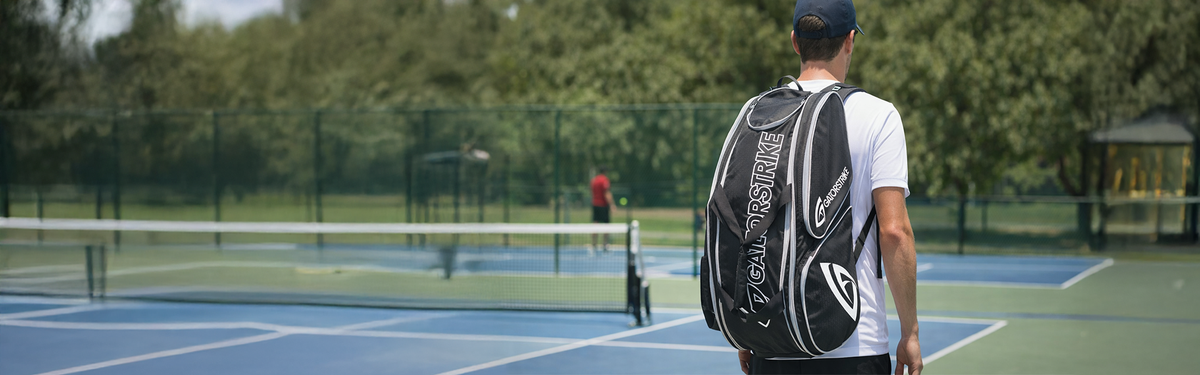
Serious pickleball players obsess over paddles, drill routines, and strategy. Yet one piece of equipment quietly affects performance every single session: your backpack. The right pickleball backpack is not just a storage solution. It protects your paddles, keeps your gear organized, preserves equipment lifespan, and makes tournament days dramatically smoother. The wrong one creates clutter, damages paddles, and turns simple travel into frustration. If you play frequently, compete, or train with intention, this guide will help you choose a backpack that actually supports your game. Why a Dedicated Pickleball Backpack Matters At first glance, any athletic backpack may seem sufficient. But pickleball equipment has unique needs. Modern paddles use advanced cores and composite faces that can degrade under extreme temperatures or pressure. Balls deform when crushed. Shoes carry moisture and odor. Grips, towels, tape, and recovery tools pile up quickly. A serious player carries more than just a paddle. You carry a system. A purpose built pickleball backpack accounts for these realities with compartmentalization, insulation, structure, and ventilation. That translates into protection, convenience, and consistency. Paddle Protection Is the First Priority Your paddle is your primary performance tool. Protecting it should guide your buying decision. Look for: Insulated Paddle Compartments Heat can soften paddle cores and alter performance over time. Cold temperatures can stiffen materials and reduce responsiveness. Thermal lined compartments help regulate exposure during travel and storage. If you frequently leave your bag in a car between matches or train in varying climates, this feature is not optional. Structured Padding A soft backpack that collapses under weight can warp paddles or damage edges. Choose a bag with reinforced walls and defined paddle sleeves to prevent pressure from shoes or water bottles. Capacity That Matches Your Playing Level Recreational players may carry one paddle. Competitive players often carry two to four. Having dedicated sleeves prevents friction between paddles and keeps backup equipment ready without damage. Organization Improves Performance Organization may not sound glamorous, but it reduces stress and improves focus. When you arrive at the court and immediately find your overgrip, balls, and towel without digging, your mental energy stays on the game. Look for: Separate compartments for paddles, balls, and accessories Interior pockets for small items like tape, keys, and wallet Dedicated ball storage that prevents loose movement Easy access exterior pockets for quick grab items Clutter slows you down. Structure speeds you up. Shoe Storage and Ventilation Are Essential Serious players sweat. Shoes absorb moisture, trap odor, and carry dirt from court to car. A ventilated shoe compartment keeps footwear separated from paddles and clothing while allowing airflow. This prevents odor buildup and protects composite surfaces from moisture exposure. If you play tournaments or train multiple days per week, this feature quickly becomes one of the most appreciated elements of your bag. Comfort Matters More Than You Think You may carry your backpack longer than you realize, especially during tournaments, travel, or league nights at large facilities. Pay attention to: Ergonomic padded shoulder straps Balanced weight distribution Breathable back panels Adjustable strap length A well designed bag distributes weight evenly so it does not pull backward or strain one shoulder. Comfort supports endurance, especially during long event days. Durability Reflects Your Commitment Serious players practice often. That means frequent packing, unpacking, travel, and storage. Choose materials that resist tearing and maintain structure. Reinforced stitching, quality zippers, and strong base panels prevent premature wear. Durability is not just about longevity. It is about reliability. You do not want zipper failures or collapsing compartments mid season. Travel Versatility for Competitive Players If you travel for tournaments, clinics, or regional events, versatility becomes important. Convertible designs that allow both backpack and duffle style carry options add flexibility. Compact but spacious designs fit overhead compartments while still holding multiple paddles and gear. For players competing consistently, this dual function design simplifies transitions from car to airport to court. Size Should Match Your Playing Identity Minimalist players may prefer a streamlined profile. Tournament players often need expanded storage. Ask yourself: How many paddles do I realistically carry Do I bring extra shirts or full change of clothes Am I traveling or playing locally Do I carry recovery tools like massage balls or wraps Buy for the player you are becoming, not just the player you are today. Bringing It All Together The ideal pickleball backpack does five things exceptionally well: Protects paddles from temperature and impact Separates shoes and sweaty gear Keeps accessories organized Feels comfortable under load Holds up to frequent use When a bag meets these criteria, it stops being an accessory and becomes part of your performance system. Why the Gatorstrike World Tour Backpack Stands Out For serious players looking for a complete solution, the Gatorstrike World Tour Backpack checks every box outlined in this guide. It offers thermal insulated paddle compartments that help protect paddle performance in fluctuating temperatures. That directly addresses one of the most critical factors in long term paddle durability. Its structured interior comfortably holds multiple paddles while preventing compression damage. Dedicated compartments keep balls, grips, towels, and accessories organized, eliminating pre match scrambling. The ventilated shoe pocket keeps footwear separate and aired out, protecting both equipment and clothing from moisture. For players who train consistently, this is a practical necessity. The backpack also features a convertible carry design, allowing it to transition between backpack and duffle style. That versatility is especially valuable for tournament players and those who travel for competition. Finally, the overall construction reflects durability and thoughtful design. It feels built for athletes who play often and expect their gear to perform at the same level they do. If you are serious about improving your game, your equipment ecosystem should reflect that commitment. The Gatorstrike World Tour Backpack is not just a place to store gear. It is a reliable, performance aligned tool that protects your investment, simplifies your preparation, and supports your competitive mindset. Choose a backpack that works as hard as you do.
Learn more
What Pickleball Pros Wish Beginners Would Stop Doing Immediately
Spend time around high level pickleball players and you will notice something interesting. They are not frustrated by beginners missing shots. They expect that. What catches their attention are the habits that quietly limit improvement. The patterns that feel harmless at first but become roadblocks later. The good news is that most of these habits are easy to correct once you understand why they matter. Here is what experienced players wish beginners would stop doing right away, and what to do instead. Stop Camping at the Baseline This is the most common mistake in early pickleball. New players serve, return, and then stay glued to the back line. It feels safe. You have more time to react. The ball looks easier to handle. But pickleball is not a baseline game. It is a kitchen line game. Pros know that controlling the non volley zone gives you better angles, more offensive options, and greater pressure on your opponents. If you remain deep, you surrender that advantage immediately. Instead, think in phases. Serve or returnLet the ball bounceMove forward with intention The goal is to establish position at the kitchen line as soon as the rally allows it. Stop Trying to Win Every Point With Power Beginners often believe that hitting harder equals playing better. In reality, power without control is one of the fastest ways to lose points in pickleball. The ball is light. The court is compact. Aggressive drives that might work against inexperienced opponents become easy blocks for advanced players. Worse, hard swings increase unforced errors. At the professional level, the majority of points are constructed patiently. Players move opponents out of position before accelerating the pace. If you want to improve quickly, focus on consistency and placement. Keep the ball low. Aim for space, not lines. Power has a place. It is just not the foundation of the game. Stop Ignoring the Soft Game Many beginners avoid dinking because it feels slow or boring. Pros see it differently. Dinking is the strategic heartbeat of pickleball. It forces precision. It creates openings. It tests patience. Skipping the soft game delays your development. Without it, you never learn how to control tempo or manage tight net exchanges. Start practicing controlled dinks with a clear objective. Keep the ball low over the net. Place it at your opponent’s feet or to their weaker side. Learn to reset hard shots into the kitchen instead of counterattacking every ball. The soft game is not passive. It is calculated. Stop Standing Straight Up at the Kitchen Watch a professional at the kitchen line. Their knees are bent. Their paddle is up in front of their chest. Their weight is balanced. Now watch a beginner. They often stand upright, paddle low, reacting late to speed ups. At higher levels, hand battles happen quickly. A low paddle position adds precious milliseconds to your reaction time. Adopt a ready position early. Paddle up. Elbows relaxed. Eyes level with the top of the net. It may feel unnatural at first. It will soon feel essential. Stop Attacking From Bad Positions Beginners often speed up the ball simply because it is there. Pros attack selectively. They look for balls that are high enough and close enough to strike downward or at a sharp angle. Attacking from below net height is risky. The ball usually pops up or flies long. A useful guideline is simple. If the ball is below net height, consider resetting or dinking.If the ball is above net height and you are balanced, attack with purpose. Smart aggression wins more points than constant aggression. Stop Forgetting Your Partner Exists Doubles pickleball is a team sport. Yet beginners frequently move independently. They chase balls their partner could easily handle. They fail to slide laterally together. They leave gaps in the middle. Professional doubles teams move as a unit. When one player shifts, the other mirrors. When one attacks, the other prepares to cover the counter. Communication does not need to be complicated. Call out shots clearly. Decide who takes middle balls. Reset together after each rally. A coordinated team beats two talented individuals almost every time. Stop Blaming Equipment Too Quickly It is tempting to believe a new paddle will solve performance issues. While paddle technology does influence spin and control, most beginner struggles come from footwork, positioning, and decision making. Pros experiment with gear, but they do not rely on it to compensate for fundamentals. Before upgrading equipment, ask yourself: Am I reaching the kitchen consistentlyAm I keeping the ball lowAm I selecting smart shots Master the basics first. Equipment can refine your game. It cannot replace sound technique. Stop Playing Only at One Speed Some beginners hit every ball hard. Others dink every ball without variation. Advanced players change tempo deliberately. They slow the rally to regain control. They accelerate when an opportunity appears. They mix pace to disrupt timing. Learning to vary speed makes you unpredictable. It also prevents opponents from settling into comfortable rhythms. Think of pickleball as a conversation. Not every sentence should be shouted. Not every sentence should be whispered. What Pros Actually Want From Beginners Here is the truth. Experienced players are not looking for perfection from beginners. They appreciate effort, awareness, and willingness to learn. They respect players who: Move forward with intentionValue consistency over flashCommunicate clearlyStay patient during longer rallies Correcting these habits early shortens your learning curve dramatically. Final Thoughts Pickleball rewards smart adjustments more than raw athleticism. If you stop camping at the baseline, abandon reckless power, embrace the soft game, maintain a ready position, and move in sync with your partner, you will immediately feel the difference. The sport becomes less chaotic. Points feel more intentional. Confidence grows naturally. Pros do not expect beginners to play like professionals. They simply hope you build habits that allow you to become one someday.
Learn more
The Secret Reason Pickleball Feels Easy… Until It Suddenly Doesn’t
Your first rally in pickleball might last longer than you expect. Within minutes, you are keeping the ball in play. The court feels small. The paddle feels manageable. The ball moves slower than a tennis ball. You walk off thinking, “This isn’t that hard.” Then, a few games later, everything changes. Shots that worked before start floating long. Opponents control the kitchen line. Fast exchanges at the net overwhelm you. You feel rushed. Out of position. Exposed. So what happened? Pickleball did not suddenly get harder. You simply crossed an invisible threshold. And that threshold is where the sport reveals its true identity. The Accessibility Illusion Pickleball is intentionally accessible. The compact court reduces running. The perforated ball slows flight speed. The underhand serve is easier to learn than an overhand tennis serve. From a motor learning perspective, early success builds confidence. Studies on skill acquisition show that tasks with lower initial physical barriers allow beginners to rally sooner, which creates a sense of competence. In pickleball, that early rally success masks the deeper tactical layers of the sport. You can participate quickly. But competing effectively requires a different level of understanding. The Real Game Happens at the Kitchen At the beginner level, rallies often unfold from the baseline. Players hit medium paced drives back and forth until someone misses. At the intermediate level, that pattern disappears. As soon as players consistently reach the kitchen line, the game transforms. It becomes a contest of: Dinks placed within inches of the net Resets under pressure Sudden speed ups from tight angles Quick hand exchanges The kitchen line is not just a boundary. It is the strategic center of pickleball. Once both teams control it, the margin for error shrinks dramatically. What felt easy from the baseline feels surgical at the net. Power Stops Working In early games, hitting hard can produce quick points. Opponents struggle to react. Balls sail past them. Then you meet players who block everything. The smaller court reduces recovery time. Well positioned opponents can absorb pace and redirect it. Advanced players rarely fear speed. They anticipate it. Research on high level match play shows that many points are won through forced errors created by placement, not sheer power. When power alone stops producing results, the game feels harder because it demands finesse. The Soft Game Is a Different Skill The most misunderstood element of pickleball is the soft game. Dinking is not simply tapping the ball gently over the net. It requires: Precise paddle angle control Stable lower body positioning Awareness of opponent reach Patience under pressure Neuromuscular control plays a bigger role than raw strength. Fine motor adjustments determine whether a dink lands perfectly in the kitchen or floats high enough to attack. For players transitioning from tennis or other racket sports, this adjustment is significant. The instinct to swing through the ball must be replaced with controlled touch. That shift is where many players feel the game “suddenly” become difficult. Speed Increases Without Warning Another reason pickleball feels harder at higher levels is the tempo shift. While the ball itself travels slower than a tennis ball, reaction time at the net can be extremely short. Once players begin initiating controlled speed ups, exchanges become explosive. These hand battles are compact and fast. There is no large backswing. No time to reset mentally. The physical movement may be small, but the decision making is rapid. Anticipation and paddle positioning matter more than reflexes alone. The game did not change. The pace of decision making did. Positioning Becomes Non Negotiable In early games, you can survive out of position. At higher levels, poor positioning is punished instantly. Standing too far from the kitchen invites sharp angles. Leaving a gap between partners creates a target. Failing to move forward together after the serve gives away control. Court geometry becomes critical. Advanced players understand that pickleball is about space management. They close angles, compress the court, and force opponents into low percentage shots. Once positioning becomes precise, casual movement is no longer enough. The Mental Layer Emerges At first, you are simply trying to keep the ball in play. Later, you are constructing points intentionally. You begin asking: Should I reset this ball or attack itIs my opponent leaning backhandAre we balanced at the lineIs this a high percentage speed up Pickleball’s difficulty is not primarily physical. It is cognitive. Strategic awareness, pattern recognition, and risk evaluation all increase as competition improves. The sport feels harder because it demands smarter decisions. Why This Is a Good Thing The shift from easy to challenging is not a flaw in pickleball. It is its greatest strength. A sport that is easy to start but difficult to master keeps players engaged. The learning curve is gradual yet deep. You can enjoy your first day. You can also spend years refining your third shot drop, your reset mechanics, and your kitchen footwork. Few sports balance accessibility and complexity so well. How to Navigate the Shift If pickleball has suddenly started to feel harder, that means you are improving. You are encountering players who expose gaps in your game. To adapt: Focus on controlling height over the netPractice dinking with intention, not just repetitionWork on resets from mid courtPrioritize positioning over shot powerStudy patterns, not just technique Improvement in pickleball often comes from slowing down, not speeding up. Final Thoughts Pickleball feels easy at first because it removes the intimidating barriers of many racket sports. You can rally quickly. You can compete casually. You can have fun on day one. But beneath that accessibility lies a deeply strategic, precision based game. It becomes harder when you start playing it the way it is meant to be played. That sudden difficulty is not a setback. It is an invitation. An invitation to refine your touch. Sharpen your positioning. Strengthen your decision making. And once you embrace that next layer, the game opens up again.
Learn more